As the global Covid-19 pandemic gradually becomes a distant memory, there has been a notable resurgence in business aviation traffic in Southeast Asia. According to data from industry tracker WingX Advance, business aircraft departures from Changi and Seletar airports in Singapore last year surged to nearly 28 percent above the levels recorded in 2019. Faizal …
February 14, 2024
5:51 AM
Surge in Business Aviation Activity Noted Across Southeast Asia
As the global Covid-19 pandemic gradually becomes a distant memory, there has been a notable resurgence in business aviation traffic in Southeast Asia. According to data from industry tracker WingX Advance, business aircraft departures from Changi and Seletar airports in Singapore last year surged to nearly 28 percent above the levels recorded in 2019.
Faizal Khan, the director of FBO operations at Jet Aviation in Singapore, attributes this rebound to a return to pre-Covid travel habits and the increasing demand for business aviation traffic. He also highlights Singapore’s strategic role and location in the Asia-Pacific region as contributing factors.
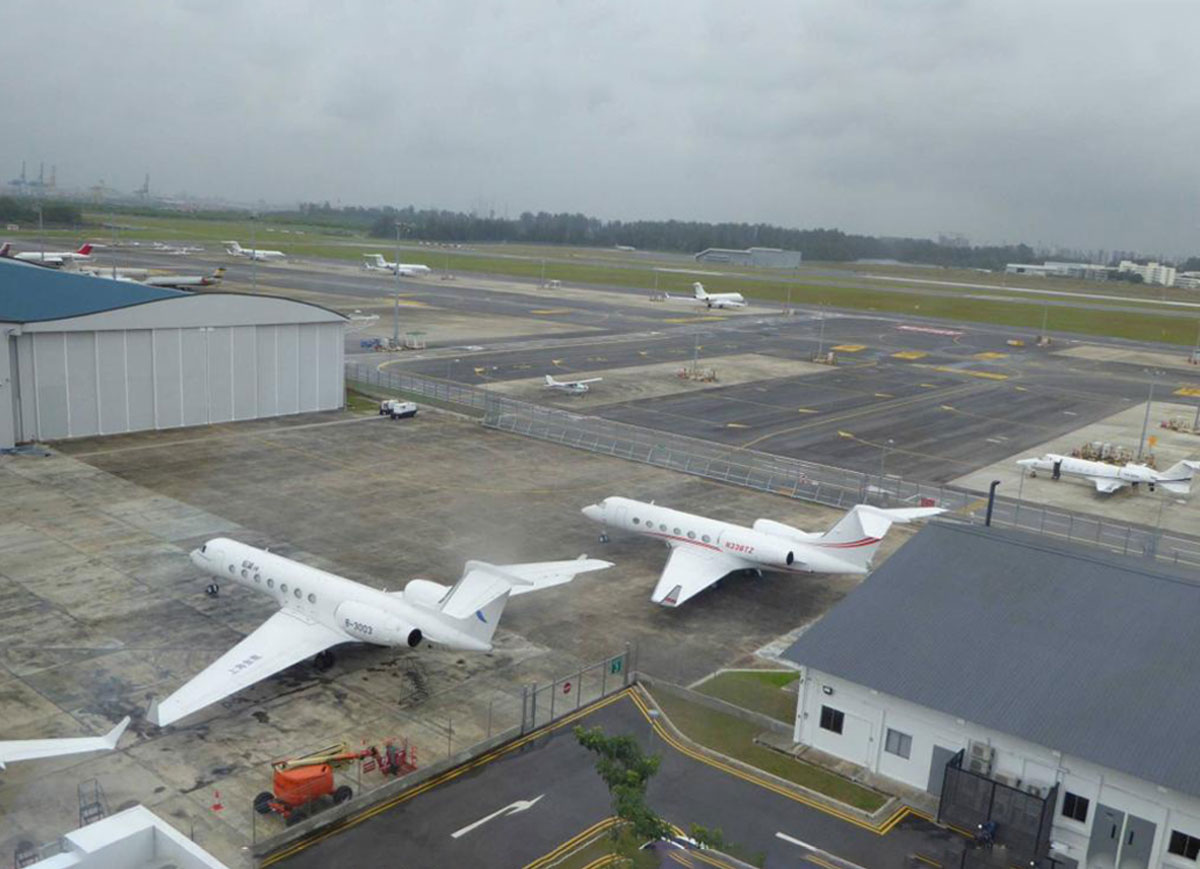
Seletar Airport clearly dominates business and private aviation traffic in Singapore, receiving 93 percent of such traffic in 2023, as per WingX data. This dominance led Signature Aviation, a major business aviation ground service provider, to cease its flight representation at Changi. Tony Lefebvre, the CEO of Signature Aviation, explained that Seletar’s proximity to the city and its appeal to customers played a crucial role in this decision.
Large cabin jets, particularly Gulfstream’s G650 and Bombardier’s Global series, have seen significant growth in the Southeast Asia and APAC region. Gulfstream reports heightened demand for its flagship G700 and ultra-long-range G800, while Bombardier notes strong interest in its aircraft from countries like India, Australia, and Southeast Asia.
Infrastructure challenges persist in Southeast Asia, with airports not originally designed for business aviation, leading to limited facilities and parking constraints, especially for larger jets. The focus on accommodating large cabin jets is evident in the ongoing construction of general aviation infrastructure in the region.
Seletar Airport faces challenges with only two counters for customs, immigration, and quarantine facilities. The increasing demand, coupled with potential new entrants in the aircraft ownership and charter market, has intensified competition in the charter business.
The Civil Aviation Authority of Singapore (CAAS) is working to support owners and operators during this upswing in business aviation. However, the issuance of operations permits faces delays due to the authority’s surveillance program for foreign operators, which assesses safety oversight capabilities and records of both operators and aircraft.
Most traffic heading into Singapore originates from the ASEAN region, offsetting the slower rebound seen in mainland China. Hong Kong has also experienced positive trends, with recovery from restrictions leading to increased aviation activity.
Seletar Airport offers sustainable aviation fuel (SAF) through Jet Aviation FBO, with supplies maintained since 2022. Custom blends of SAF are available, allowing customers to choose a percentage blend to meet their specific requirements. Signature Aviation, meanwhile, supplies SAF to the Bombardier service center at Seletar and plans to offer SAF credits in Hong Kong through book-and-claim by the end of the year.

Subscribe to Our Newsletter
Keep in touch with our news & offers
Thank you for subscribing to the newsletter.
Oops. Something went wrong. Please try again later.