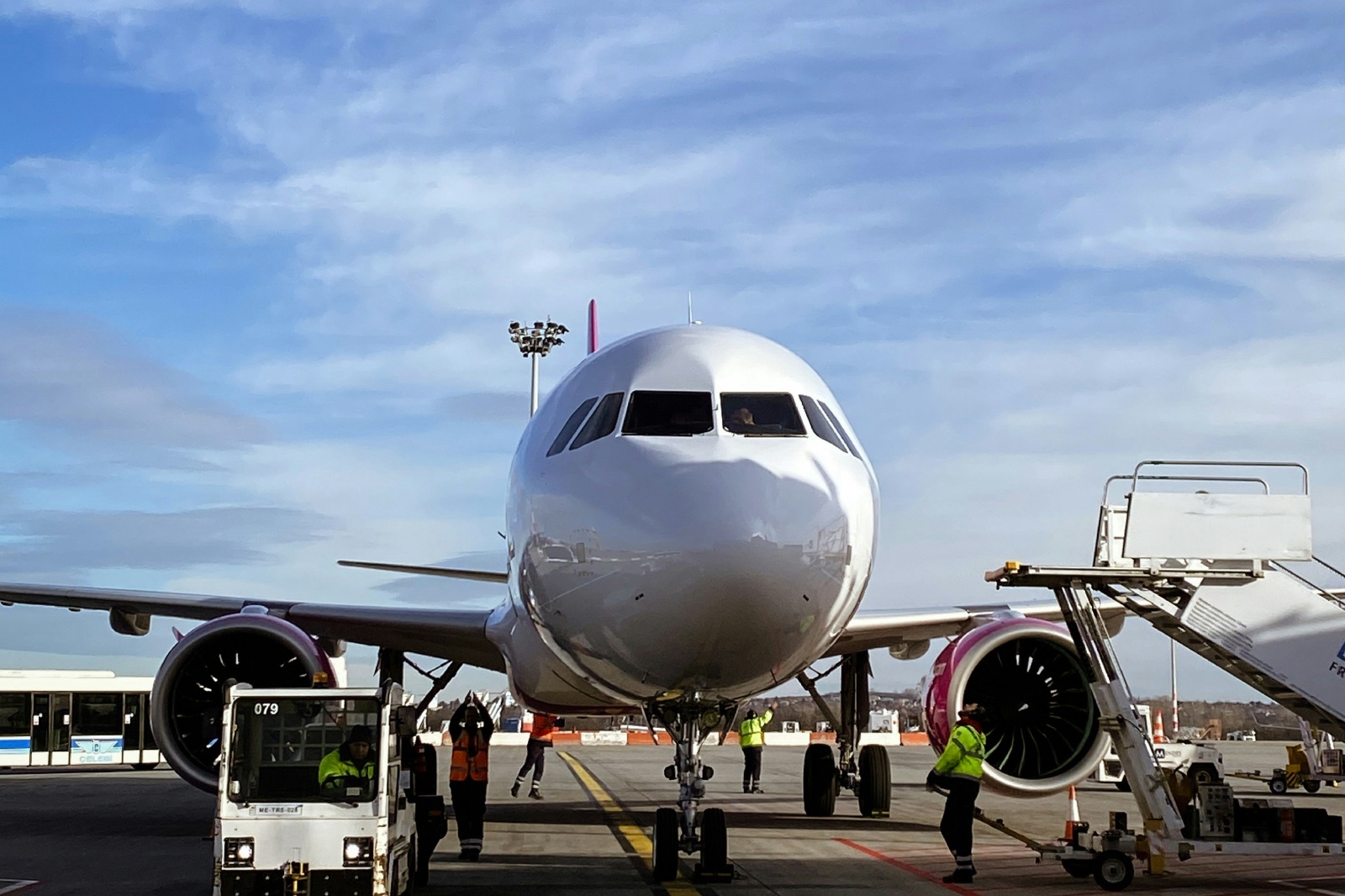
We bring together perspectives from senior leaders at NMIA and NIA, offering an inside look at how two of India’s most significant greenfield airport projects are taking shape.

As India accelerates its aviation growth story, a new generation of airports is redefining what connectivity and infrastructure can look like in a rapidly evolving economy. Emerging hubs across the country are no longer just transit points – they fuel regional growth, innovation, and global integration. The recent inauguration of Noida International Airport (NIA) underscores this shift, while parallel developments at Navi Mumbai International Airport (NMIA) highlight the scale and ambition driving India’s next wave of aviation infrastructure.
In this cover story, we bring together perspectives from senior leaders at both NMIA and NIA, offering a rare, inside look at how two of the country’s most significant greenfield airport projects are taking shape. From navigating complex timelines and development challenges including evolving project dynamics, to embedding advanced technologies and sustainability at their core, their insights reveal the strategic thinking behind building world-class airports in India today. As India’s aviation map expands, their vision demonstrates how these emerging gateways are set to play a significant role in enhancing connectivity, unlocking economic potential, and setting new global benchmarks.
✱✱✱✱
The Future Lands Here: NMIA CEO on Shaping India’s Next Mega Hub
Capt. BVJK Sharma, CEO of Navi Mumbai International Airport (NMIA), shares the latest developments shaping one of India’s most anticipated infrastructure projects. From on-ground progress to future vision, he offers insights into how the airport is set to redefine connectivity and drive regional growth, in an interview with Swaliha Shanavas.
What was the original vision of NMIA and how is the airport positioning itself within India’s broader ambition to become a global transit hub?
The vision of NMIA is rooted in future readiness creating not just an airport, but an integrated aviation ecosystem that supports India’s long-term growth. As the aviation market expands rapidly, NMIA has been developed as a next-generation gateway that aligns with India’s aspiration to become a global transit hub.
It focuses on world-class infrastructure, seamless connectivity, and efficient transfers. Designed to complement India’s geographic position between East and West, it will facilitate passenger and cargo flows across continents.
As part of Mumbai’s twin-airport system, NMIA will transform a capacity-constrained gateway into a high-efficiency, globally connected hub serving both domestic and international markets.
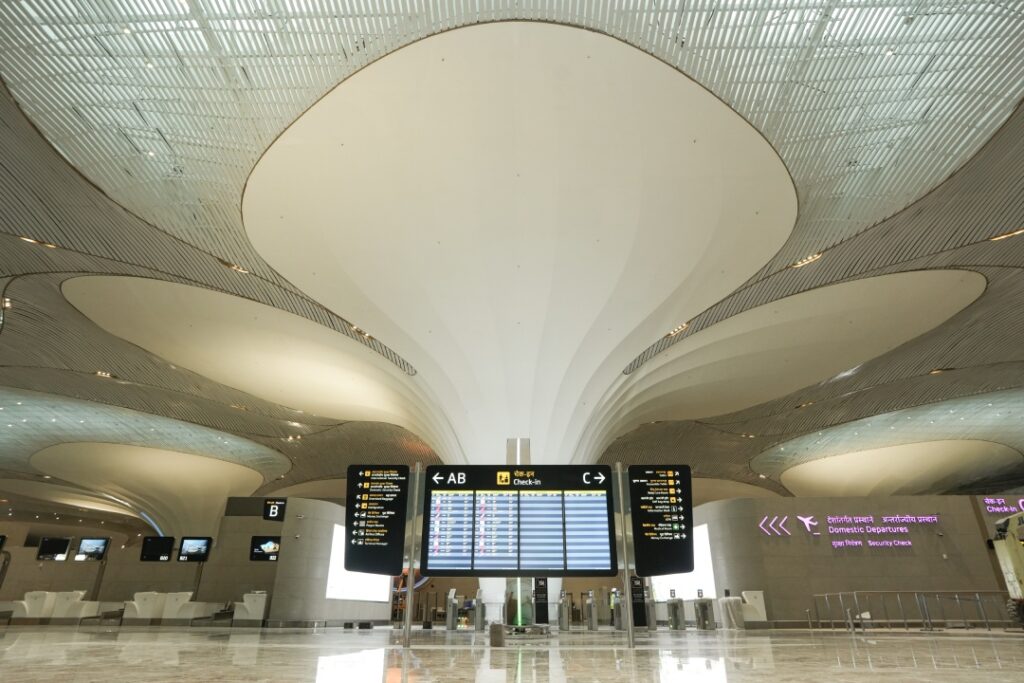
How does NMIA fundamentally transform the aviation ecosystem of Mumbai, and in what ways will it complement Chhatrapati Shivaji Maharaj International Airport? Can Mumbai realistically evolve into a coordinated dual-airport hub system?
Mumbai can evolve into a coordinated and efficient dual-airport system. The combined demand of Mumbai by 2040 is slated to be more than 180 million passengers per annum (MPPA). NMIA will be a pivot that will aid the fulfilment of this demand gap. Here is how it will achieve this change.
Capacity: NMIA marks a major milestone in Mumbai’s aviation journey, with the ability to handle 90 million passengers annually. It will support the city’s long-term growth while positioning Navi Mumbai as a key economic hub.
Connectivity: Seamless connectivity via Mumbai Trans Harbour Link, metro lines, and freight corridors strengthens NMIA’s role as a centre for commerce and logistics, while advanced cargo facilities boost Maharashtra’s presence in global trade.
Dual-airport model: Mumbai’s aviation ecosystem has long been anchored by Chhatrapati Shivaji Maharaj International Airport (CSMIA), which connects the city to global markets. NMIA represents the next phase, unlocking additional capacity, enhancing operational flexibility, and enabling future growth.
Expansion: NMIA’s summer schedule expands its domestic network to 46 destinations, adding 30 new routes. Airlines including IndiGo, Akasa Air, and Air India Express are scaling up operations, taking capacity to over 1,000 weekly movements, with daily traffic expected to reach about 156.
Together, CSMIA and NMIA are functioning as a twin-airport system, allowing for smarter traffic distribution, improved scheduling, and more seamless passenger experience.

CEO, Navi Mumbai International Airport
What specific design and infrastructure elements at NMIA were conceived with transfer traffic and hub efficiency in mind? And how is it shaping up?
NMIA is designed as a hub-ready airport, with efficiency built into planning and design. Using advanced tools like Building Information Modelling (BIM), the master plan ensures precision, coordination, and scalability. Its layout enables seamless passenger movement, shorter transfer distances, and efficient aircraft handling, while integrated airside and landside planning optimizes turnaround times and smooth connectivity – essential for hub operations.
Innovative construction methods, including large-scale rock filling, and infrastructure designed to withstand extreme weather and seismic conditions, enhance long-term operational reliability.
The next construction phase, targeting a capacity of 50 million passengers per annum, will be executed in a much simpler manner using precast elements. Nearly, 8,000-line items have been identified, with EPC contractors engaged from the concept stage.
How does NMIA address India’s capacity constraints, and what share of Mumbai’s traffic will be transfer versus origin-destination when fully developed?
Capacity planning has been central to NMIA design from the outset. As a greenfield airport, it is built for scalability, allowing capacity to be unlocked in phases. This is vital for Mumbai, where demand has long exceeded available slots.
Together with CSMIA, NMIA functions as a complementary twin-airport system, easing congestion and enabling growth in both origin-destination and transfer traffic, with transfers expected to rise as connectivity and airline partnerships strengthen.
Which global regions do you see as strategic markets for NMIA in the early stages?
NMIA is designed to handle both domestic and international traffic, beginning with domestic routes while international services will be introduced gradually, subject to approvals and airline readiness.
Current efforts focus on strengthening connectivity across key domestic markets. The expanded summer schedule highlights rapid network growth within months of launch, demonstrating NMIA’s ability to scale efficiently while maintaining operational discipline.
The priority remains building a strong domestic network and delivering seamless passenger experience, while working with airline partners to expand internationally as demand and readiness evolve.
How competitive will NMIA be in terms of airport charges, turnaround times, and minimum connection times compared to major international hubs?
Competing with established global hubs depends on the overall experience delivered to both airlines and passengers. NMIA is designed with a strong focus on efficiency, consistency, and ease of operations.
Its approach is to streamline processes, ensure seamless coordination, and make the journey – from arrival to departure – intuitive and reliable. Ultimately, NMIA’s competitiveness will come from delivering a smooth, well-coordinated experience that meets the evolving expectations of global travellers and airline partners.
How do you attract long-haul and regional carriers, and what collaborative models are you prioritizing for long-term transit building?
NMIA focuses on building a strong, sustainable network, offering airlines unconstrained capacity, efficient turnaround, and a catchment that is economically vibrant yet under-served.
We are engaging with full-service and low-cost carriers across long-haul and regional markets, supporting seamless connectivity through scheduling, infrastructure readiness, and passenger experience.
Collaboration is also key: we work with airline partners on network planning, connectivity, and transfer facilitation, ensuring that NMIA evolves as a hub where airlines can scale efficiently while providing passengers a smooth, connected journey.
“With its market size, strategic geography, and rising demand, India can emerge as a strong and competitive global aviation hub when supported by unified policy and world-class infrastructure like NMIA.”
How will cargo and integrated logistics support NMIA’s hub ambitions, and can it seamlessly combine passenger, cargo, and logistics as compared to legacy airports?
Cargo and integrated logistics will be central to NMIA’s hub ambitions as global trade and e-commerce expand. Alongside CSMIA, the twin-airport system enables efficient distribution of passenger and cargo traffic, strengthening Mumbai’s role as a global gateway for trade and connectivity.
NMIA is built to global standards with a focus on technology, efficiency, and seamless integration across operations. Its optimised layout, advanced cargo infrastructure, and fast baggage systems ensure reliability and quick turnaround. Scaling from 20 to 90 million passengers and from 0.5 to 3.25 MMTA cargo annually, NMIA will support high-volume movement across segments, creating a future-ready aviation ecosystem for the region.
Beyond infrastructure, which policy or regulatory measures are essential for India to effectively compete with established global transit hubs?
Infrastructure is a key enabler, but for India to truly compete with global transit hubs, it needs aligned, progressive policies. The government has taken positive steps through liberalised bilateral agreements, the UDAN scheme to boost regional connectivity, and airport expansion under the National Infrastructure Pipeline. These initiatives create a strong base for growth.
With its market size, strategic geography, and rising demand, India can emerge as a strong and competitive global aviation hub when supported by unified policy and world-class infrastructure like NMIA.
In 10-15 years, how would you like the global aviation community to describe NMIA’s role in the sector?
As one of the fastest-growing aviation markets, India is poised to play a far more significant role in global air travel, and Mumbai, with NMIA will be central to that shift. In 10-15 years, the global aviation community should describe NMIA as a world-leading, technologically advanced, and sustainable “aerotropolis” that revolutionized regional connectivity. It is envisioned as a premier, high-capacity hub driving India’s economic growth, seamlessly complementing Mumbai’s existing airport to solidify the region as a major global aviation hub.
✱✱✱✱
A Greenfield Vision Takes Flight: India’s New Aviation Gateway
Kiran Jain, Chief Operating Officer at Noida International Airport (NIA) sits down with Swaliha Shanavas to discuss the rapid evolution of NIA as a key pillar of India’s global aviation ambitions, highlighting its future-ready greenfield design, integrated passenger and cargo ecosystem, also outlining the project’s scale, vision, and long-term impact.
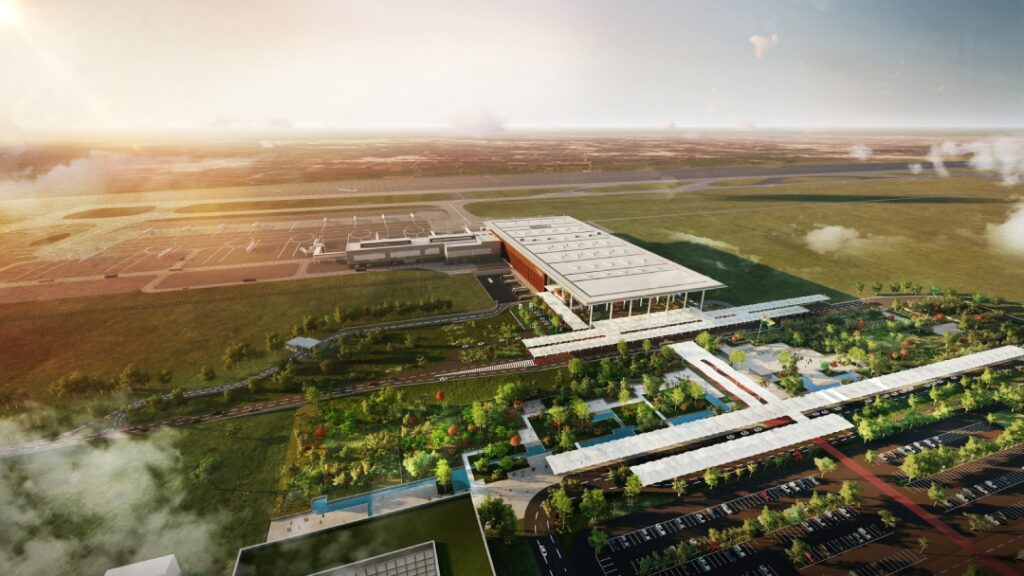
Future-Ready Design
At a time when India is doubling down on its ambition to become a global aviation powerhouse, the newly inaugurated NIA is positioned not just as an infrastructure project, but as a catalyst for connectivity, logistics, and regional growth. For Kiran Jain, who has been closely involved since inception, the scale and significance of building a greenfield airport in a densely populated region is not lost.
“Greenfield airport projects are rare in any person’s lifetime,” she says, underscoring both the opportunity and the responsibility. “We are very fortunate that we have a chance at building this airport, in probably one of the most densely populated regions in the world.”
From the outset, the airport has aligned with India’s ambition to become a global aviation hub. Backed by Zurich Airport Group and developed under a public-private partnership, it is a fully foreign direct investment-funded airport, a rarity in India’s aviation landscape. But what truly sets it apart, Kiran emphasizes, is the ability to design and build from scratch.
“Greenfield clearly means that we get the chance to actually plan everything from the ground up with what I would call a future-ready infrastructure,” she explains. This includes not only meeting concession requirements but also defining scalability, efficiency, and sustainability on their own terms.

Chief Operating Officer
Noida International Airport
Strategic Location
The choice of location was equally strategic. Positioned in a high-density catchment with strong economic indicators – ranging from spending power to travel propensity – the airport sits at the heart of North India’s industrial belt. “You’re looking at passenger catchment, economic well-being, ability to travel… all those matrices,” Kiran notes. “And then there’s logistics movement, which is equally critical. Airlines don’t survive on passengers alone.”
Cargo as a Priority
The logistics advantage is a recurring theme. The airport lies in a region that already generates a significant share of cargo traffic for North India, making it a natural candidate for a multimodal cargo hub. Partnering with Air India SATS, it will initially handle 250,000 tonnes of cargo annually, with plans to scale up to nearly 1.5 million tonnes.
“We designed with both passenger and cargo in mind,” the COO says. “Most airports are designed passenger-first. We ensured cargo had equal importance.” This has translated into practical design decisions – ample land for truck movement, integrated terminals, and fewer regulatory constraints than central Delhi – that could greatly improve turnaround times and supply chain efficiency.
Government support
Yet, for all its scale, the airport’s development hinges on strong institutional support. Kiran is unequivocal about the role of the State Government in enabling connectivity infrastructure – roads, rail, and more. “Without the support of the government, we wouldn’t be where we are,” she admits. “Everything is aligned… and that’s what makes a project like this succeed.”
Integrated Mobility
Connectivity, however, extends beyond highways and rail lines. As an airport operator, the COO points out, their role is to curate a seamless mobility ecosystem – from taxis and buses to emerging sustainable transport options. “The whole idea is: how do you bring people to this airport?” she says.
Partnerships with state-run bus services and private mobility providers are already in place, with sustainability as a key selection criterion.
Phased Expansion
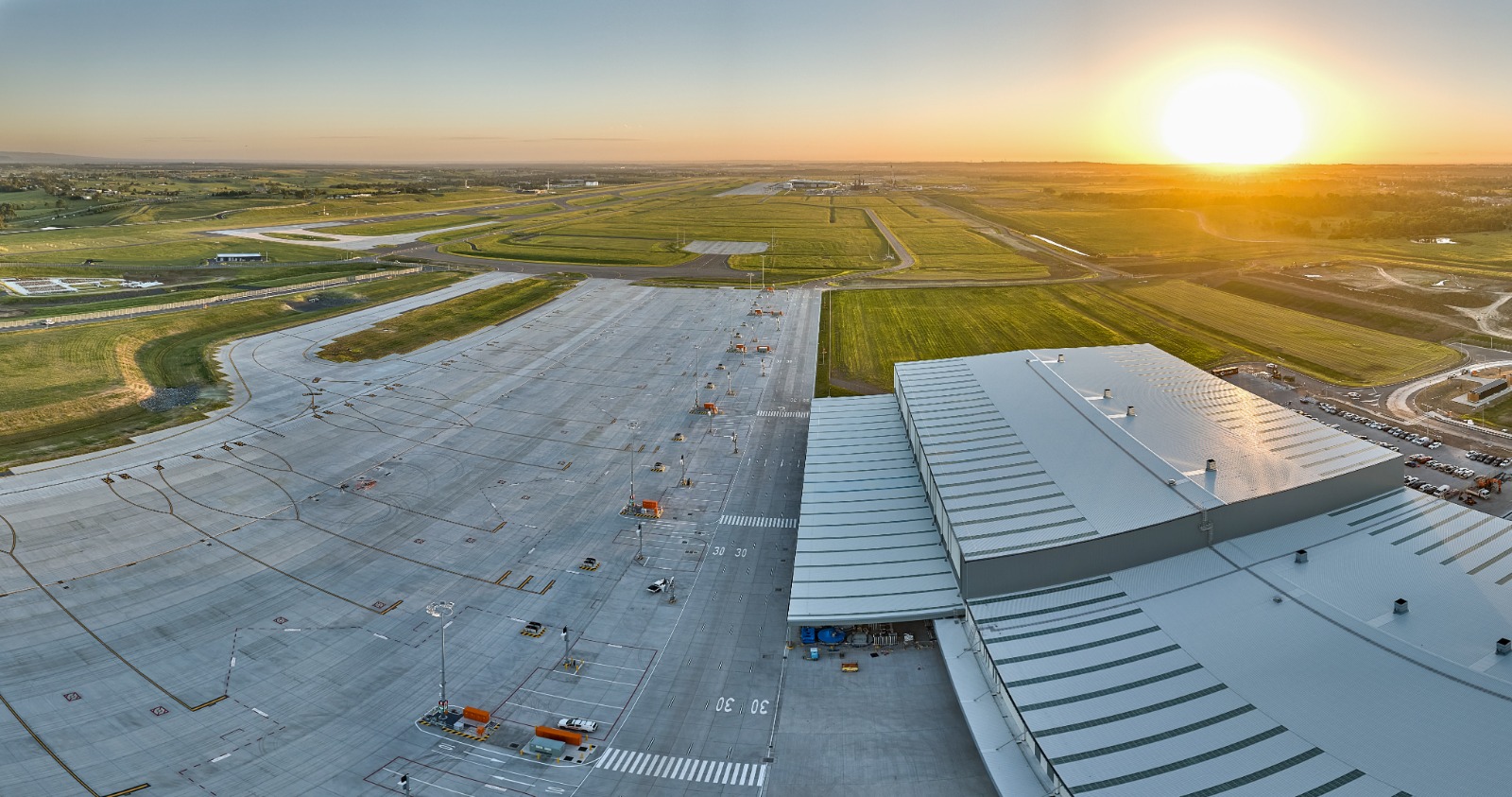
The airport itself will evolve in phases, starting with one runway and a capacity of up to 12 million passengers, and eventually scaling up to 70 million over a 40-year concession period. Expansion is demand-driven: each phase is triggered when the previous one reaches 80% capacity. Spread across roughly 3,000 acres, the project is vast – not just in scale, but in scope.
“We’re not just building an airport,” Kiran says. “We are literally establishing a whole city.” That includes everything from medical facilities and hotels to catering infrastructure and utilities. “If you look at it from that perspective, you’ll realise that we’ve been able to do it in such a short time.”
Complementing Delhi Airport
One inevitable question is how this new airport will coexist with Delhi’s Indira Gandhi International Airport. The COO dismisses the notion of competition outright. “There is no need to compete,” she says. “What we are trying to do is provide more capacity, ease congestion and improve access.”
Drawing parallels with global cities like New York, London, and Chicago, she argues that multiple airports are a necessity, not a luxury. Instead of competition, the emphasis is on cooperation and choice. For passengers, the decision will depend on proximity, routes, and convenience. For airlines, it opens up new operational possibilities. “We are giving choice to the airlines and passengers,” Kiran says. “At the end, the choice remains with them.”
Airline Networks & International Reach
Airlines, for their part, have responded enthusiastically. Domestic carriers are already planning to replicate metro-style networks, connecting major cities and key regional destinations. “India is acquiring more narrow-body aircraft than any other market in the world,” she points out. “The growth is undeniable.”
International operations, however, are shaped by bilateral agreements, making expansion more complex. Even so, the airport’s lack of slot constraints offers a distinct advantage. “We have the ability to provide slots that feed into airline networks,” she explains, particularly for routes to the Middle East, a major destination for Indian travellers.
MRO & Aerotech Vision
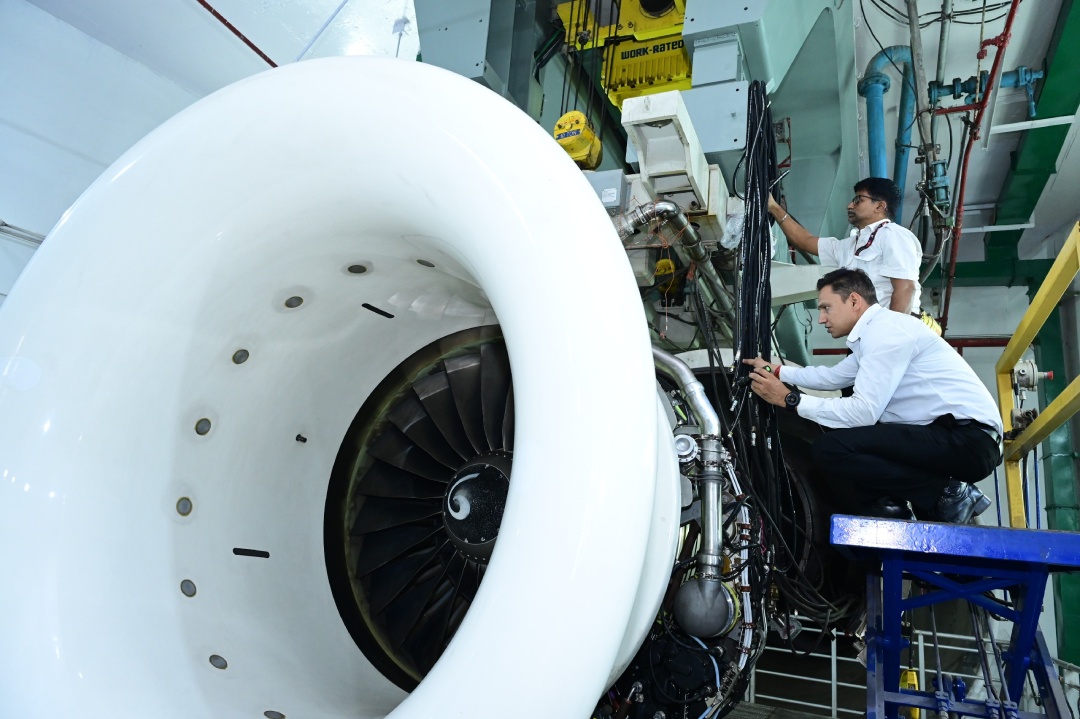
Beyond passengers and cargo, the airport is also laying out the groundwork for a robust MRO (Maintenance, Repair, and Overhaul) ecosystem. With 40 acres already allocated, the first partnership – with Akasa Air – is in place. But the airport’s vision goes further.
“It’s not just about engines,” Kiran says. “It’s about the seats, the straps, the buckles… the entire ecosystem.” The goal is to reduce India’s reliance on overseas MRO facilities and build a self-sustaining aviation hub that could eventually evolve into an “aerotech park,” integrating defence and manufacturing sectors as well.
Sustainability at Core
Sustainability is another cornerstone of the project. With a net-zero ambition, the airport is incorporating renewable energy, electric ground support systems, and advanced water and waste management solutions. “We prioritize renewable electricity,” the COO notes, citing solar installations and off-site wind energy sourcing.
Design choices like maximizing natural light and ventilation serve both environmental and economic goals. “It helps us save on energy costs,” she says. Even landscaping has been approached thoughtfully, with large-scale tree transplantation and reforestation efforts.
Still, Kiran is candid about the challenges. “I would love to tell you we are 100% there, but that’s not true,” she admits. “These are cost-heavy initiatives; you put all the cost upfront with the promise of recovering it over time.”
Tech-Driven Operations
Technology is integrated into the airport’s operations. Unlike legacy airports where digital systems are often retrofitted, here they are integral to the design. “Our digital journey has been pre-planned, it’s not an afterthought,” the COO explains.
From biometric-based passenger processing to AI-driven operational dashboards, the airport aims to deliver a seamless experience. “The passenger probably never has to open their phone,” she says. “Their face is recognised till they get on the aircraft.”
Behind the scenes, predictive analytics and real-time monitoring systems will optimize everything from queue management to maintenance, she notes.
“Our whole philosophy is based on Swiss efficiency and Indian warmth. We want every airline, and every passenger to experience something that is efficient, innovative, and rooted in local culture.”
Swiss Efficiency, Indian Warmth
When asked about the long-term vision, Kiran’s answer is as much emotional as it is strategic. “I’m in love with my airport,” she admits with a smile. But beyond personal pride, she views the project as a key enabler of India’s global ambitions.
“Our whole philosophy is based on Swiss efficiency and Indian warmth,” she says. “We want every airline, and every passenger to experience something that is efficient, innovative, and rooted in local culture.”
Ultimately, Noida International Airport is poised to be more than just another aviation hub. It is designed as a gateway – focused not on spectacle, but for seamlessness. “It will become their favourite airport,” Kiran says, “not because it’s jazzy, but because it’s efficient.”