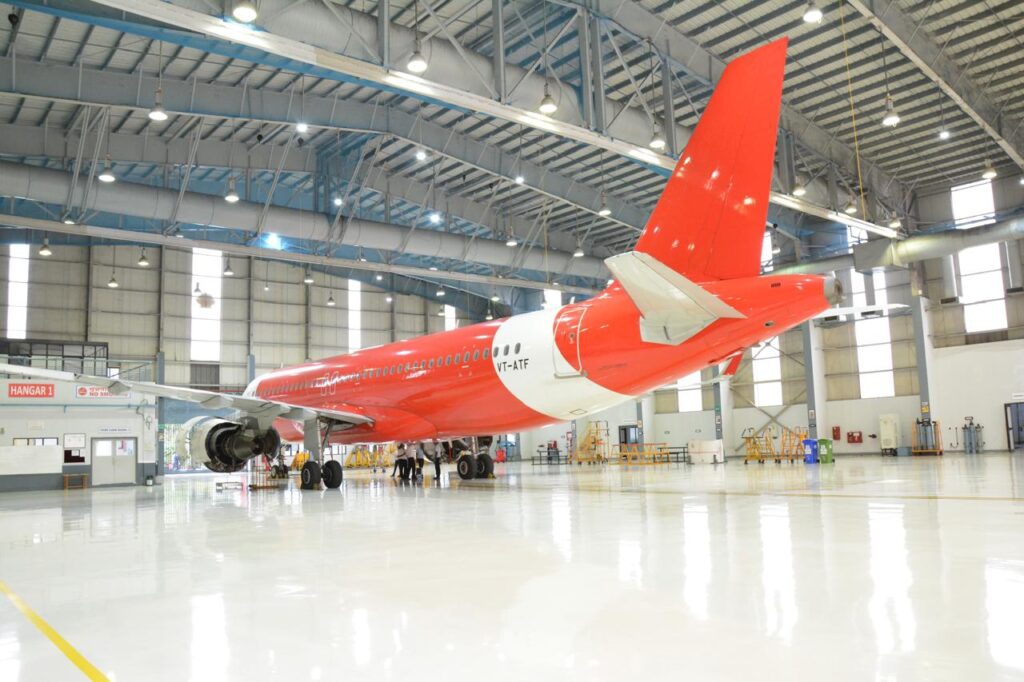
The CEO of AIESL talks about the realities, risks and road ahead for India’s MRO ecosystem.
As India’s aviation sector surges ahead, the MRO industry faces a critical inflection point, with significant opportunity but key structural constraints. In this in-depth conversation, Sharad Agarwal, CEO, AI Engineering Services Ltd. (AIESL) speaks with Swaliha Shanavas about the realities, risks and road ahead for India’s MRO ecosystem.
Growth in Aviation: A Delayed Windfall for MRO
India’s aviation boom is undeniable, but its benefits for maintenance, repair and overhaul (MRO) are not immediate. As Sharad Agarwal explains, “first of all, new aircraft! MRO has to wait because the business thrives on older aircraft.”
At first glance, a flood of new aircraft and the scrapping of older fleets might seem like bad news. “Is it bad news for MRO?” he asks rhetorically. Not quite. The shift is instead creating a different kind of opportunity – particularly in components and engines.
India, which earlier lacked scale, is now approaching a tipping point. “Let us say just about 100 aircraft, the business volume is not enough for anyone to set up a component/engine business,” Agarwal notes. However, with nearly 1,000 Airbus A320-family aircraft and nearly 500 MAX expected in the coming years, that equation is changing.
“The component business – it’s time that it comes to India,” he says. Engine maintenance is already moving in that direction. With a large share of India’s narrowbody fleet (Boeing 737-MAX or A320) powered by LEAP engines, a major engine MRO facility is being established. “Safran is coming up with a massive MRO, which is going to be the largest in the world,” he adds.
While still ramping up, such developments signal a shift: “At least the airlines in India will have an option for the engines, they do not have to go abroad.”
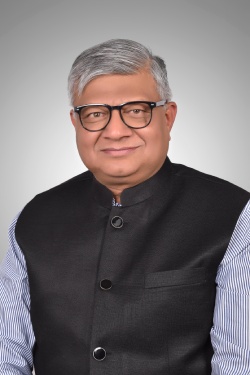
CEO
AI Engineering Services Ltd.
Capability Gaps: Airframes vs Engines vs Widebodies
India’s MRO capabilities today are uneven across segments.
For line/base maintenance of narrowbody aircraft like the A320 and Boeing 737, Agarwal is confident: “India has enough capability, so that should not be an issue.”
But widebody aircraft tell a different story. “Currently no one has A350 base maintenance capability in India,” he points out. Setting up such infrastructure is capital-intensive: “the tools and equipment are all going to be expensive, but it’s time that [this] comes to India.”
Looking ahead, newer aircraft like the 777X are still years away, while emerging players like Embraer or Airbus A220 could find opportunities as the narrowbody space becomes crowded.
The Current State: A Market Lost Overseas
Despite growing demand, a staggering proportion of India’s MRO business still flows abroad. “It’s an open secret that 85% of the business is going abroad,” Agarwal says bluntly.
The reasons are structural: Lack of modern engine and component shops; Limited base maintenance capacity; and Regulatory requirements tied to international certifications.
However, he believes this could soon change. “Once the LEAP shop is ready, a lot of business will be done in India. Components – again, a lot of business will be done in India. This is going to change the equation.”
There are also capacity constraints domestically. “At least one EASA approved MRO is overflowing with work,” he notes, forcing airlines to look overseas despite higher costs.
Policy Push: Clearing Long-Standing Bottlenecks
Recent government reforms have begun addressing some of the industry’s biggest pain points.
“There has been a long-pending demand… about rationalization of GST and customs duties,” the CEO says. Earlier, unpredictability around duties created uncertainty. That has now changed: Basic customs duty on MRO imports – 0%; and GST – Flat 5%.
“No more suspense game,” he remarks.
Another key reform is extending the re-export window for foreign aircraft or components under maintenance – from six months to one year. “That provides a lot of relief,” especially in cases of delays due to spare parts or regulatory approvals.
Additionally, 100% foreign direct investment (FDI) is now permitted in MRO. While Agarwal is cautious about revealing specifics, he acknowledges: “Yes, definitely we would like to use the same, but that’s strategic.”
Playing Catch-Up Globally
Within India, Agarwal positions his organization as a leader: “We are the largest MRO in India, and the most diversified one.”
But globally, the picture is different. “In Asia, we are far behind; we are playing a catch-up game,” he admits, referencing established players that benefited from early airline backing and ecosystem support.
India’s MRO sector, by contrast, evolved without consistent institutional backing. “We never got direct support. Whatever it is, we will manage and thrive.”
Differentiation Through Capability
Despite challenges, there are areas where Indian MRO players stand out.
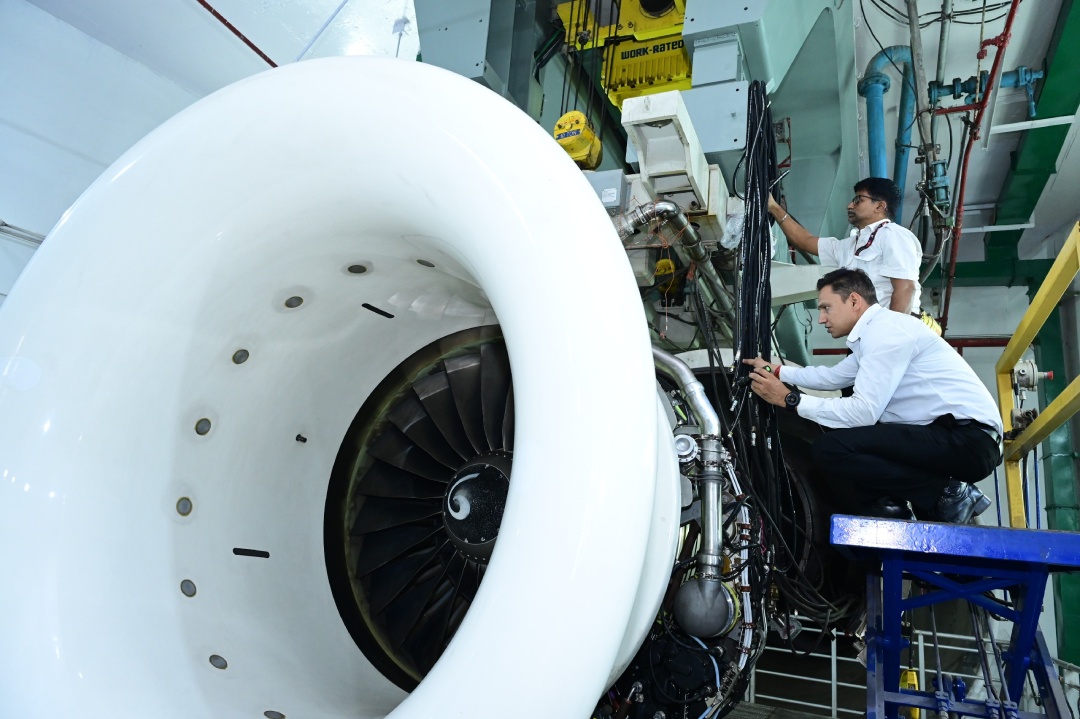
“We are the only ones who have sizable capability for engine and component [maintenance],” Agarwal says. Notably, his organization operates “three engine test houses” – a significant investment and a key differentiator.
“That’s a huge positive as we have the basic capabilities, rather than starting from scratch,” he adds, especially when exploring technical partnerships or collaborations.
Structural Challenges: Land, Costs and Risk
If there is one issue the CEO emphasizes repeatedly, it is land.
“In MRO, you need a big parcel of land at major airports,” he notes. But with airport privatization and commercial pressures, “land availability is coming at a premium.”
This erodes India’s natural cost advantage. “Whatever advantage we have because of labor being cheaper gets lost because the land is expensive.”
The business itself is also inherently risky – High upfront investment; Returns only after 3–4 years; Uncertain demand for specific aircraft types.
“It’s a small size of the cake for which many will be vying,” he says.
OEM Constraints and Certification Barriers
Another major hurdle lies with original equipment manufacturers (OEMs). “They are not willing to part with maintenance data,” Agarwal says, or make it “prohibitively expensive” that it becomes unviable.
On top of that, European Aviation Safety Agency (EASA) certification requirements over and above the DGCA certification creates additional costs. “You need to maintain two different approvals, which becomes another challenge.”
For leased aircraft, EASA compliance is often non-negotiable, pushing airlines toward overseas MROs.
The Talent Question: Strong Base, Weak Specialization
India has a solid pipeline of entry-level aviation technicians. “There are around 50 training institutes,” Agarwal says, producing graduates ready for line and base maintenance. Equipped with basic skills, they can get their licence within a year or two.
But the gap emerges in specialized areas like engines and components. “There are no dedicated schools,” he notes. Companies must train and certify staff themselves, a time-consuming and expensive process. Current solutions are ad hoc.
Why Airlines Still Go Abroad
Despite domestic capabilities, airlines continue to send aircraft overseas. According to the CEO, the reasons are limited but significant: EASA-certified maintenance for lease returns; Lack of engine/component facilities; Absence of widebody paint shops.
“There is absolutely no reason otherwise,” he insists.
Supply Chain Issues, and Optimism
Supply chain disruptions continue to remain a concern for many. But Agarwal is pragmatic: “How long will you keep complaining about supply chain?”
He believes market forces will resolve the issue. “New innovators will come, set up shops to provide required solutions.”
Interior components like seats are currently bottlenecks, but “some shops are already coming up… mostly waiting for approvals.”
Collaboration as the way forward
Collaboration between airlines, MROs, OEMs, and regulators is critical. “Airlines have negotiating power because they are placing large orders,” the CEO notes. Working together could accelerate domestic capability building.
Industry bodies are also playing a role, with regular engagement leading to policy improvements.
What Needs to Change
To unlock the sector’s potential as a global MRO hub, Agarwal highlights three priorities – Affordable land with long-term leases; Access to OEM data at reasonable cost; Stronger international regulatory alignment.
The Road Ahead: “India Is Waiting to Thrive”
Despite the hurdles, Agarwal remains optimistic. “India is available, and just waiting to thrive,” he says. “It just needs a bit of spark.”
With the right policy support and industry collaboration, he believes India can deliver “world-class services – not just to Indian airlines but globally.”
His message to policymakers is simple: listen and act. “Only the user knows where the shoe pinches,” he says. “The government is in continuous dialogue with the industry and understands most of the pain points. Once the government knows what is hurting, half the problem is solved.”
As India’s aviation growth story continues, the MRO sector stands on the cusp – held back by constraints, yet driven forward by undeniable momentum. Whether it can ignite into a global hub may depend on how quickly that “spark” arrives.