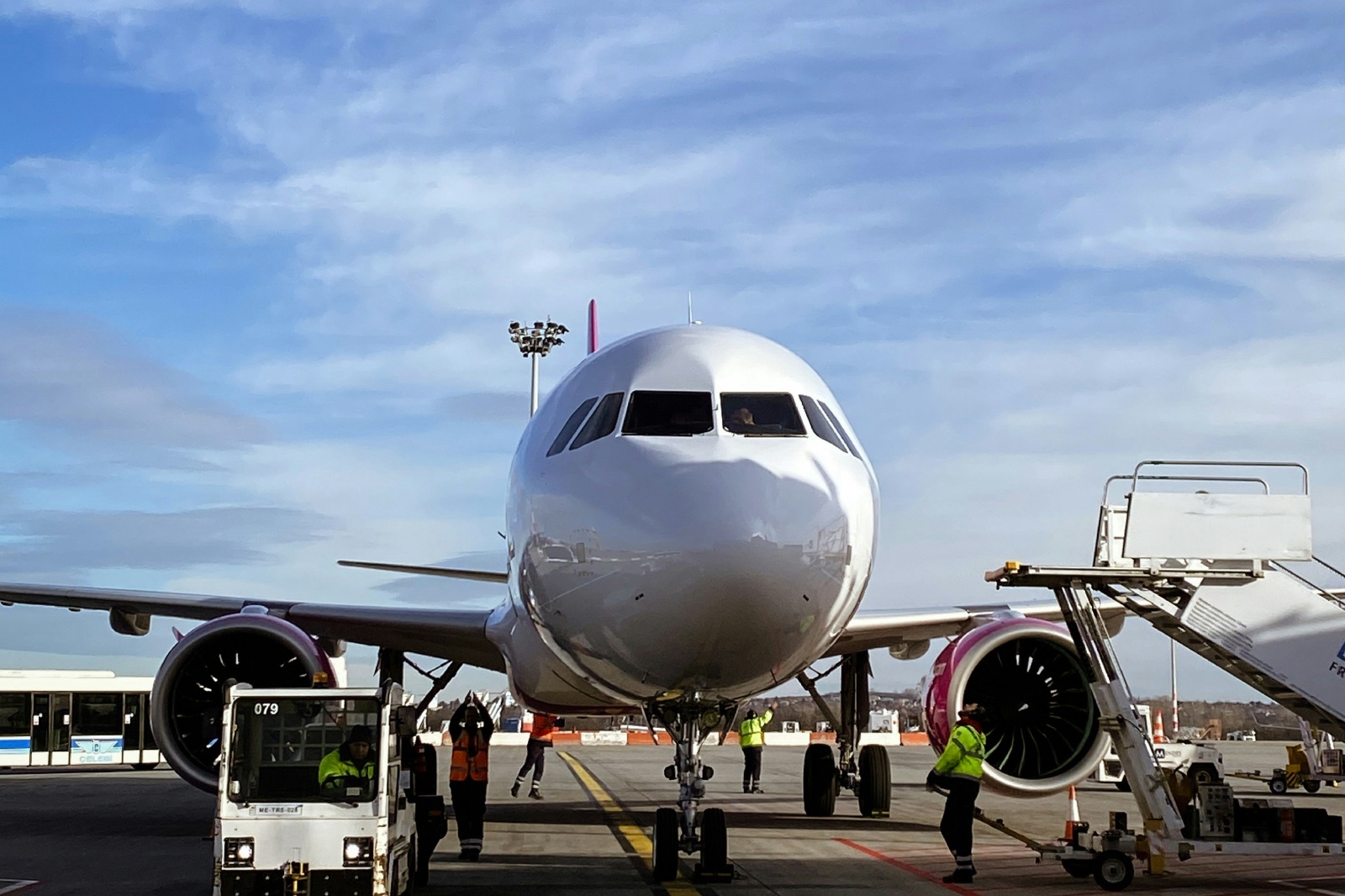
Global aviation’s pledge for net-zero by 2050 is driving the UAE to leverage its hub status to lead sustainable aviation fuel development. R. Keerthana writes
March 4, 2026
12:42 PM
Is SAF set to take off in the UAE?

Come 2027, global airlines must meet a crucial target set by the International Civil Aviation Organization (ICAO). They will be required to offset their net CO₂ emissions from international flights under ICAO’s Carbon Offsetting and Reduction Scheme for International Aviation (CORSIA). One of the ways airlines could do this is transition from fossil fuels to a low-carbon alternative known as Sustainable Aviation Fuel (SAF). With the potential to cut CO2 emissions by up-to 80% throughout its life cycle compared to conventional jet fuel, SAF is emerging as the most direct and credible solution to achieve these objectives, either alongside or in place of traditional carbon offsets.
Airlines that are members of the International Air Transport Association (IATA) have committed to achieving net-zero carbon emissions from their operations by 2050.
Against this backdrop, the United Arab Emirates is positioning itself as a regional leader in SAF development – leveraging its aviation hub status, strong waste-to-value ecosystem, and national net-zero ambitions to build a domestic SAF supply chain.
In 2022, the UAE Ministry of Energy & Infrastructure, together with the General Civil Aviation Authority (GCAA), launched the UAE National SAF Roadmap, setting a target of 700 million litres of domestic SAF production per year by 2030. It also aims to reach a voluntary target of 1% SAF (locally produced) in fuel supplied to national airlines at UAE airports by 2031. In October 2025, the UAE submitted the third edition of its State Action Plan on Aviation Emissions to ICAO. The updated plan adopts a comprehensive “basket of measures” to reduce aviation emissions, including 42 projects in operations and technology, and 13 projects related to SAF and low-carbon fuels.
Dubai Municipality, Tadweer Group, and Lootah Biofuels have also launched initiatives in the SAF space, reflecting a growing nationwide effort to develop domestic production capacity and position the UAE as a regional leader in sustainable aviation fuels.
Sustainable aviation fuel (SAF), produced from renewable sources or feedstocks, such as used cooking oils, fats, plant oils, municipal, agricultural and forestry waste, is expected to meet a set of stringent sustainability requirements including regulations set by ICAO’s CORSIA scheme and the EU Renewable Energy Directive (RED). These requirements include food security, water management and human rights considerations. As a “drop-in” fuel compatible with existing aircraft and refueling infrastructure, SAF can cut lifecycle emissions by up to 80% depending on the production pathway.
While future low-carbon technologies will take years to mature, SAF can begin cutting aviation’s carbon footprint today. SAF still has to be blended with traditional aviation fuel, which is made from fossil fuels. Current rules state that SAF can make up a maximum of 50% of the mixture, but there are hopes that airlines will be able to use 100% SAF by 2030.
According to Dr. Udayan Banerjee, Founder, Sustainable Advisory LLC, “SAF has been under development for more than a decade, but regulatory momentum caused by ICAO has accelerated its adoption.”
CORSIA aims to stabilize net CO₂ emissions from international aviation at 2020 levels and achieve carbon-neutral growth in the short to medium term. The scheme is currently in its first voluntary phase (2024–2026), before transitioning to mandatory participation from 2027 to 2035 for countries accounting for over 90% of global international aviation activity, he explains.
The UAE, Saudi Arabia, and Oman are among the gulf countries participating in CORSIA since 2025.
Waste-derived SAF
Currently, waste oils, including used cooking oil (UCO) and non-edible oils, are the most widely used feedstocks for commercial SAF production. Even industrial waste streams rich in carbon emissions have proven viable for creating low-carbon aviation fuel. Beyond oils, municipal solid waste (MSW) is emerging as a promising source. Demonstration projects around the world have shown the feasibility of this approach.
In early 2024, Dubai Municipality signed an MoU with a developer consortium including BESIX and ENOC to develop a facility processing 2,000 tonnes of MSW per day.
“The initiative aligns directly with Dubai’s Net Zero 2050 strategy,” says Eng. Mohammed Ahmed Alrayees, Director of the Waste Strategy and Projects Department at Dubai Municipality. He adds that such projects also reflect the wider climate imperative facing the country and the world: “The urgency of climate change highlights the need for the UAE to develop and implement a unified national policy framework that recognises both the complexities of the aviation energy transition and the country’s unique opportunities and national context. Aviation is one of the UAE’s most successful industrial sectors and a cornerstone of Dubai’s economy.”
The SAF generated by Dubai’s WtSAF project is expected to supply Dubai Airport, Emirates Airlines, and other local carriers with fuel that complies fully with ReFuelEU and CORSIA regulations.
Dubai Municipality is actively engaging stakeholders across the ecosystem to build momentum and incorporate feedback from multiple perspectives. These engagements include the Dubai Supreme Council of Energy, the Dubai Department of Finance, Emirates Airline, Dubai Airports, ENOC, the Dubai Environment and Climate Change Authority, as well as technology providers and project investors, he notes.
Financing and the road ahead
Despite technological progress, financing remains the biggest bottleneck, points out Banerjee. “SAF projects require significantly higher capital expenditure than conventional waste-to-energy plants, and traditional debt financing models often fall short. Long-term offtake agreements, policy support, and blended finance structures will be critical to unlock investment.”

Subscribe to Our Newsletter
Keep in touch with our news & offers
Thank you for subscribing to the newsletter.
Oops. Something went wrong. Please try again later.