Marios Sentris of Parsons examines how Airport 4.0 leverages smart technologies to optimize resources and drive sustainability across operations.
In an interview with Aviation360, Marios Sentris, Program Director and Head of Aviation Europe & Middle East, Parsons, explores how Airport 4.0 leverages smart technologies, data-driven decision-making, and EPR principles to reduce energy use, optimize resources, and embed sustainability across every aspect of airport operations.
Airport 4.0 aims to integrate smart, energy-efficient systems across the aviation ecosystem. What innovative digital solutions are you deploying to help airports significantly reduce energy consumption while enhancing operational performance?
We are now delivering Airport 4.0 – the cognitive era where airports are no longer just transit hubs but transformational, personalized ecosystems. This evolution is powered by the seamless integration of IoT networks, 5G connectivity, advanced data analytics, and AI, enabling fully autonomous operations and intelligent decision-making.
What began with Airport 2.0’s focus on automation and self-service has now matured into a vision of airports as multimodal mobility hubs. By facilitating seamless transfers between various modes of transportation, airports are becoming integral to a passenger-centric multimodal mobility system, driving innovation in both air travel and urban development.

Program Director and Head of Aviation
Europe & Middle East, Parsons
Airports are transforming into sustainable, technology-driven, and customer-centric spaces. And we have continued to integrate the latest smart technologies, sustainability practices, and resilient infrastructure to meet the evolving demands of the aviation industry.
For instance, we incorporate Enterprise Security by Design (ESbD) into all our projects, taking a holistic approach to risk management. By leveraging AI-enabled technologies, our subject matter experts make informed decisions on integrating ESbD principles from the earliest stages – planning, design, delivery, and maintenance – ensuring risks are minimized while energy-efficient solutions are seamlessly integrated to enhance operational performance throughout the airport lifecycle.
The implementation of biometric-based passenger processes significantly enhances operational efficiency while reducing energy consumption. By replacing traditional manual processes, airports can streamline passenger flow, reduce reliance on energy-intensive infrastructure like check-in counters and security stations, and optimize resource allocation.
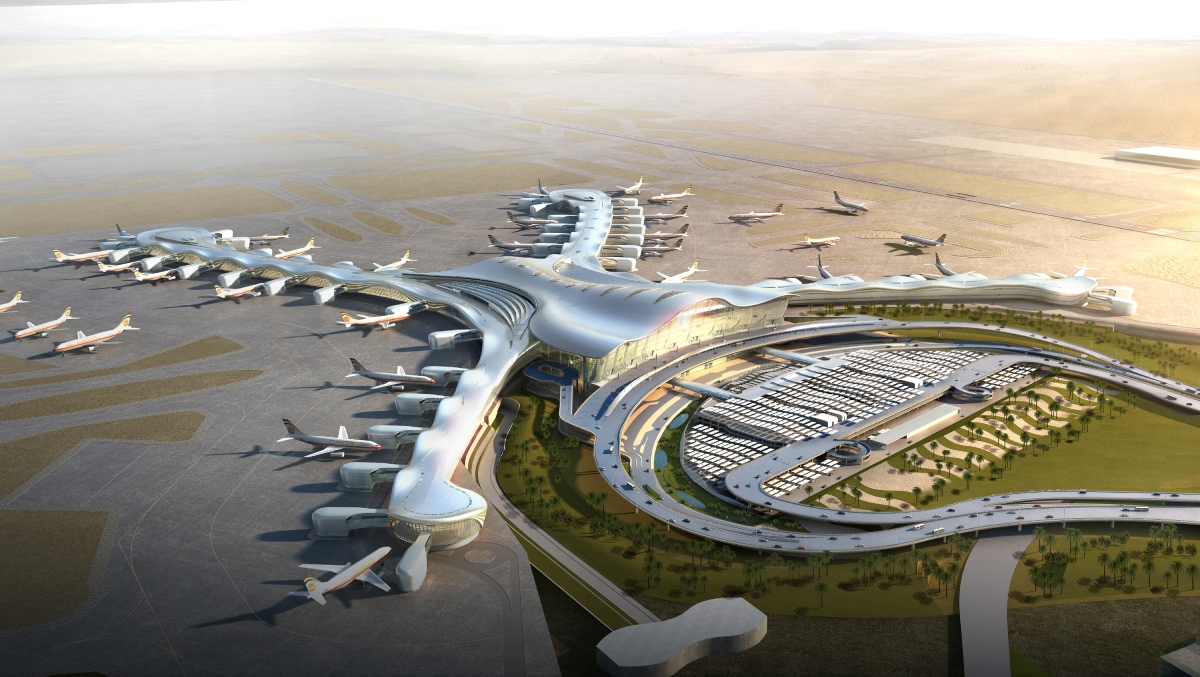
The proliferation of AI and machine learning enables airports to analyze large volumes of operational data to optimize energy use across systems. AI-powered asset management helps assess the efficiency of legacy equipment, optimizing energy-efficient upgrades, including improvements to MEP systems and ground support vehicles. For example, our work with Abu Dhabi International Airport and Kuwait International Airport, integrated energy-efficient practices from the design phase, including the use of renewable energy sources like solar panels.
Airports are increasingly adopting smart LED systems equipped with motion and daylight sensors to reduce energy consumption while maintaining passenger comfort and safety. These systems dynamically adjust lighting levels based on occupancy and available natural light, significantly lowering energy use while maintaining passenger comfort and safety.
Advanced multimodal solutions supported by intelligent traffic management systems enable seamless transitions between different modes of transport. These technologies help optimize traffic flow, reduce congestion, and minimize energy consumption associated with airport ground operations, contributing to both sustainability and operational efficiency.
How can smart systems and data-driven strategies help airports implement more sustainable and traceable waste-handling processes, in line with Airport 4.0 objectives?
By leveraging advanced technologies and data-driven strategies and working with our Digital Solutions team, we design and implement systems that enhance efficiency, promote traceability, and support circular economy principles. Through collaboration with vendors, contractors, and local communities, we integrate innovative solutions that minimize environmental impact throughout the lifecycle of airport operations.
Real-Time Monitoring and Traceability is central to this approach. IoT-enabled sensors in waste bins track fill levels, waste types, and collection frequency, ensuring timely collection and preventing overflow. These systems generate detailed reports on recyclable and non-recyclable waste streams, enabling traceability and supporting compliance with sustainability goals. They also identify recoverable materials, such as food waste, which can be diverted for composting, etc., contributing to circular economy initiatives.
Data-driven insights enable airports to work with vendors to reduce packaging waste or implement take-back programs for reusable materials. During construction, contractor specifications include sustainable waste management practices, such as sorting and recycling construction waste, ensuring minimal environmental impact.
Passenger Engagement and Education: Interactive waste stations with digital displays can educate passengers on proper waste segregation and provide real-time feedback on their contributions to sustainability. Mobile apps inform passengers about recycling programs, waste reduction initiatives, and the environmental impact of their actions, fostering greater participation in sustainable practices.
What role does intelligent infrastructure play in optimizing water usage and recycling within airport operations, and can you share any success stories?
Intelligent infrastructure plays a critical role in optimizing water usage and recycling within airport operations by leveraging advanced technologies to monitor, manage, and repurpose water resources efficiently.
In our projects such as Abu Dhabi International Airport and Kuwait International Airport, we have integrated intelligent wastewater treatment and recycling plants into the airport’s infrastructure. These systems safely treat greywater and blackwater, enabling the reuse of fully treated water for non-potable purposes such as irrigation, cooling systems, and cleaning operations.
Another example of intelligent infrastructure optimizing water usage can be seen at Dubai International Airport, where smart irrigation systems powered by AI monitor weather conditions and soil moisture levels are optimizing water usage for landscaping. This approach has significantly reduced water consumption while preserving the airport’s green spaces.
The use of water-efficient fixtures, such as dual-flush systems and low-flow aerators, drastically reduces indoor water consumption, contributing to overall sustainability goals. Through real-time monitoring systems, we provide airports with actionable insights into water usage patterns, enabling proactive maintenance and the identification of inefficiencies.
By combining these technologies with sustainable design practices, such as the integration of drought-resistant landscaping and advanced drainage systems, we’re supporting airports build resilient infrastructure capable of adapting to future environmental challenges.
How are you helping airports and their vendors align with Extended Producer Responsibility frameworks through technology – particularly when it comes to tracking, reporting, and ensuring accountability across complex supply chains?
Parsons is committed to helping airports and their vendors align with Extended Producer Responsibility (EPR) frameworks by leveraging advanced technologies, comprehensive planning, and collaborative stakeholder engagement. The safety and resilience of aviation projects depend on securing their complex vendor and contractor ecosystems, because even a single weak link in the supply chain can lead to severe compromise. Mitigating supply chain risks must begin at the design stage, before systems are procured or deployed.
To allow for end-to-end visibility, we conduct comprehensive due diligence and technical assessments to address supply chain risks, regulatory compliance, and future-proofing airport infrastructure. By embedding EPR considerations into the entire project lifecycle, we help airports proactively manage materials, reduce waste, and promote circular economy principles.
We engage with stakeholders, including government authorities, local communities, and industry partners, to gather input and address potential social impacts. We are not only enabling airports to meet EPR obligations but also driving innovation and sustainability across the aviation industry. By combining technology, expertise, and collaboration, we are shaping a more responsible and environmentally conscious future for airports and their ecosystems.