Industry experts share how smarter ground operations and sustainable infrastructure are reshaping airport performance, and what it will take for Asian Airports to be future-ready.
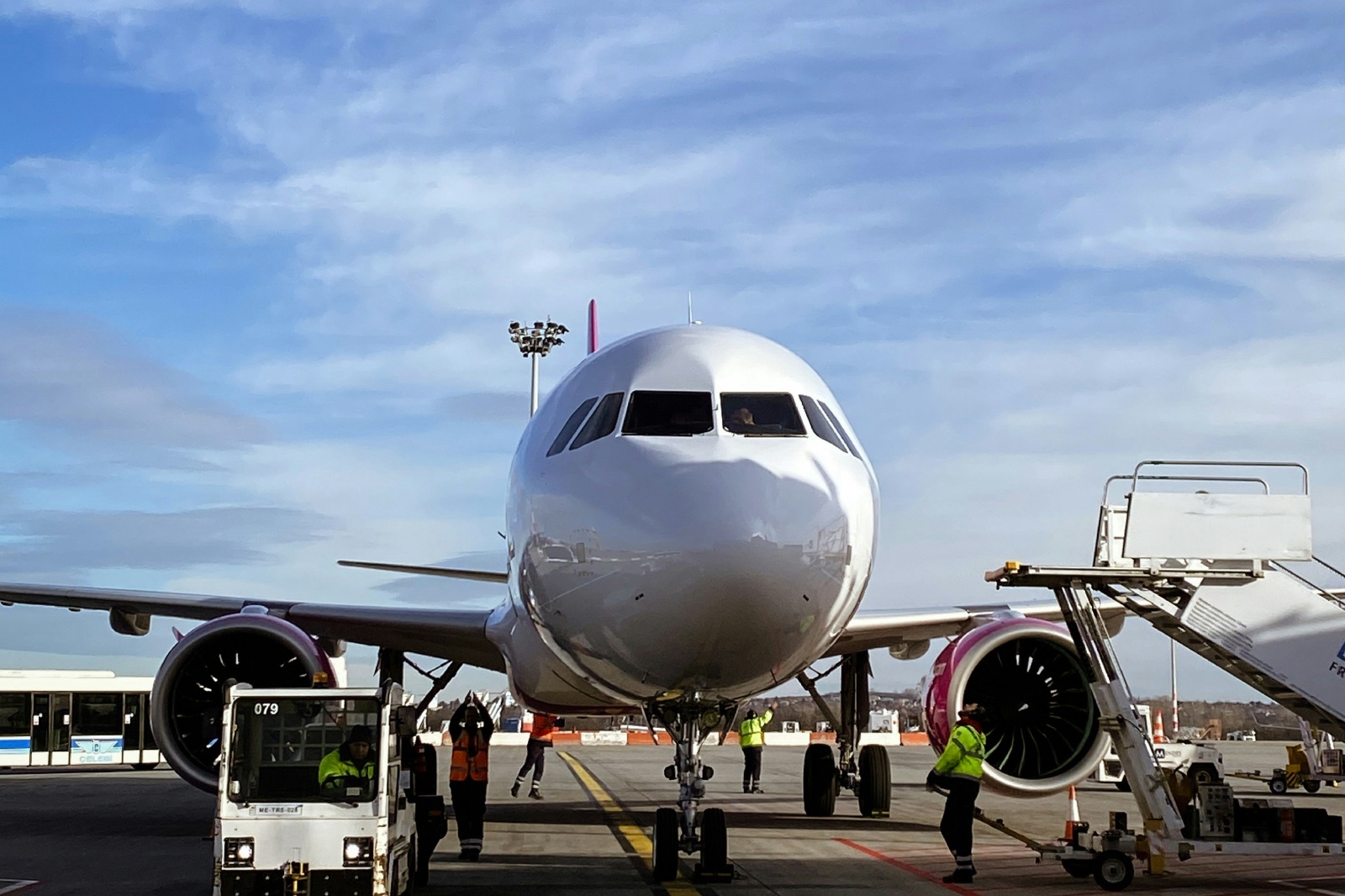
Asia’s airports are entering a new phase where ground handling and sustainability are taking centre stage amid rapid growth and digital transformation. In this Aviation360 feature, industry leaders from Ground Team Red (GTR) Malaysia, Skylight Aviation, PwC and Fastcharge GSE share how electrification, smarter ground operations and sustainable infrastructure are reshaping airport performance – and what it will take for Asian hubs to stay efficient, resilient, and future-ready.
Airports across Asia are undergoing a major shift – much of it is happening on the ground. With passenger numbers rising and travel demand surging, ground handling teams face pressure to keep operations moving smoothly while adopting new technologies.
To explore this transformation, Aviation 360 spoke with four industry experts who are helping shape ground operations and airport infrastructure across the region.

Managing Partner
Skylight Aviation
Steven Dickson, Managing Partner at Skylight Aviation, brings deep expertise in airport operations, technology strategy and ground support equipment optimization. Edward Clayton, Partner for Capital Projects & Infrastructure at PwC, highlights the growing complexity of large-scale airport projects and the role of digital tools, data analytics and sustainable design in enhancing passenger experiences.
Musdalifa Abdullah, CEO of GTR Malaysia, and Darren King, Managing Director of Fastcharge GSE, share insights on the transition to electric ground support equipment, the challenges of EV infrastructure, and the need for collaboration across airlines, airports and ground handlers to advance sustainable aviation in Asia while maintaining operational efficiency.
Asia airport growth trends
Steven Dickson of Skylight Aviation points to the region’s expanding middle class and increasing intra-ASEAN trade as major drivers behind the growth momentum.
Countries such as Indonesia, Vietnam and the Philippines are witnessing strong air traffic growth, prompting large-scale investments in airport infrastructure, including new terminals and regional airports.

Partner for Capital Projects &
Infrastructure at PwC
“Asia is at the forefront of global aviation growth, driven by robust middle-class expansion and increasing regional trade within ASEAN,” Dickson explains. “Several markets are recording double-digit traffic growth, which is accelerating investments in new airport capacity across the region.”
While some markets have experienced a slower recovery after the pandemic, development ambitions remain strong. China, for instance, has seen softer inbound tourism recovery compared with expectations, yet this has not significantly slowed airport expansion plans across Asia.
“Even where certain markets have faced a slower rebound post-Covid, the appetite for airport development remains extremely strong across Asia.”
Sustainability is also becoming a central pillar of airport development strategies. Airports across the region are increasingly adopting green technologies and environmentally responsible practices to align with global sustainability targets.
“There is a growing emphasis on sustainability, with airports investing in green technologies and operational practices that support global environmental standards,” says Dickson. However, capacity constraints continue to challenge many secondary hubs, particularly when compared with the Gulf region, where infrastructure expansion has often outpaced demand.
“Many Asian airports still face capacity limitations, particularly in secondary hubs. But the region has a unique advantage – new airports can integrate smart technologies during the design phase rather than retrofitting older infrastructure.”
Electric GSE adoption rising
Musdalifa Abdullah of GTR Malaysia says the shift towards cleaner airport operations starts with electric ground support equipment (GSE).

CEO, GTR Malaysia
“By replacing diesel-powered equipment, airports can significantly reduce emissions while improving operational efficiency,” he explains. “Advances in battery technology, including solid-state and fast-charging systems, are making adoption more practical. Reducing downtime is critical and these innovations are making electric equipment far more reliable.”
He also highlights renewable energy integration. “Solar-powered charging infrastructure is a practical step that supports both emission reduction and long-term sustainability goals.”
Workforce readiness is equally important. “Investing in our people is just as important as investing in technology. Pilot projects give us the data and confidence needed to scale up electrification,” says Abdullah.
Darren King from Fastcharge GSE, adds that regulation is accelerating the transition. “Airports across Asia are increasingly adopting battery-electric GSE as governments push for stronger carbon reduction goals.”
He notes financial benefits, with lower fuel and maintenance costs improving efficiency. “Markets such as Singapore, Thailand and Malaysia are likely to see strong demand.”
“GSE must be scalable, sustainable and seamlessly integrated,” King says, adding that efficient charging and modular electric systems will support growth while maintaining long-term cost efficiency.
Barriers to Green fleets
For many ground handlers, transitioning to sustainable fleets is an important step toward reducing emissions, but it also comes with several practical challenges.
“The upfront cost of electric ground support equipment is still significantly higher than traditional diesel vehicles. For many operators, that financial commitment can slow down the transition,” Musdalifa Abdullah notes. “Like any new technology, ground handlers want confidence that electric equipment will perform reliably in demanding airport environments.”
“Advances in battery technology, including solid-state and fastcharging systems, are making adoption more practical. Reducing downtime is critical and these innovations are making electric equipment far more reliable.”
To address these barriers, the industry is exploring several solutions, and working closely with manufacturers allows them to develop solutions that are both practical and financially viable, he adds.
Smarter passenger experience
Edward Clayton of PwC says digitalisation must be integrated into the airport’s entire operational model. “We’re seeing much more visible digitisation at airports, from automated check-in and e-passport controls to real-time messages informing passengers about gate changes or delays.”
However, he notes that introducing digital systems often reshapes how airports function behind the scenes. “Digitisation can create knock-on effects for airport operations. If immigration becomes faster, for example, more passengers will spend time airside, which means airports need to rethink space planning and passenger flow.
“Airports are using everything from delay notifications and call-forward boarding groups to Bluetooth-based wayfinding apps that guide passengers efficiently through terminals. Queue monitoring gives airports valuable data to improve resource planning and reduce wait times for passengers,” Clayton explains.
Is digitalisation transforming airports in Asia?
As airports across Asia push ahead with electrification, Musdalifa Abdullah highlights infrastructure as a key hurdle. “Airports need more charging stations and stronger grid capacity to support electric GSE,” he says, adding that “smart grids help optimise energy use and integrate renewables like solar power.”
Steven Dickson points to regional contrasts. “Airports like Singapore Changi Airport remain the gold standard, with automation improving efficiency, while Ninoy Aquino International Airport has struggled with outdated infrastructure, though privatisation is driving change.”
He adds that technologies such as IoT-based baggage tracking and real-time data analytics, allow airports to optimise resources.
AI is also gaining traction. “Major hubs like Incheon International Airport are using AI for predictive maintenance and passenger flow analysis improving reliability.”
However, challenges remain. “Alignment between regulators, operators and investors is essential,” he says, stressing that cybersecurity must be built into airport development from the outset, with markets like Japan and Singapore already leading the way.
Can innovation stay efficient?
Dickson highlights ongoing ramp congestion at busy hubs. “Airports in Bangkok and Manila often see traffic growth outpacing infrastructure,” he says. “But Hong Kong International Airport has demonstrated how GSE pooling can improve efficiency, adoption remains limited due to silos.”
He notes that Japan and Singapore are already proving how biometric immigration systems can create seamless passenger journeys but stresses disciplined investment. “The key is focusing on scalable technologies.”
He also says Noi Bai International Airport is exploring low-cost automation. “Ultimately, Asian airports can leapfrog older hubs with modular, future-ready solutions.”
Will partnerships drive sustainable ground handling?
Musdalifa Abdullah emphasises that collaboration is essential to accelerating sustainable aviation across Asia. “Sustainability cannot be achieved by a single organisation. Airlines, airports and ground handlers must work together to create practical, industry-wide solutions.
“Collaborative investments help share costs and risks while enabling scalable solutions like shared charging infrastructure. Open dialogue and insights from pilot projects help accelerate adoption.”
Abdullah concludes that integrating operational, technical, and logistical expertise allows stakeholders to reduce emissions and build a more sustainable, resilient aviation sector.