The President of Sustainable Aviation Fuel Association (SAFA) underscores the need for a holistic ecosystem approach to unlock India’s potential as a global leader in SAF production.

Jimmy Olsson, President of Sustainable Aviation Fuel Association (SAFA), India, discusses carbon intensity, pricing, agriculture, policy, and scalability in an interview with Swaliha Shanavas. He underscores the need for a holistic ecosystem approach to unlock India’s potential as a global leader in SAF production.
The big picture
Sustainable Aviation Fuel (SAF) is emerging as a key lever for decarbonizing aviation, offering significant lifecycle emissions reductions compared to conventional jet fuel. For airlines, SAF represents the most viable near-term pathway to achieve net-zero targets without major changes to existing aircraft or infrastructure. Limited global supply and significantly higher production costs continue to constrain widespread adoption, making policy support and long-term offtake deals vital. Globally, regions such as the EU are advancing SAF adoption through mandates, incentives, and long-term targets.
In India, SAF is gaining traction alongside rapid aviation growth, though progress will depend on feedstock availability, pricing, and a clear policy roadmap.
Sustainable Aviation Fuel Association (SAFA) was founded in January 2025 and with approximately 400 members, has become “a strong platform bringing together stakeholders across the SAF ecosystem,” said Olsson. The Association was formed to accelerate the development, policy formulation, adoption, and large-scale deployment of SAF to decarbonize the aviation sector.
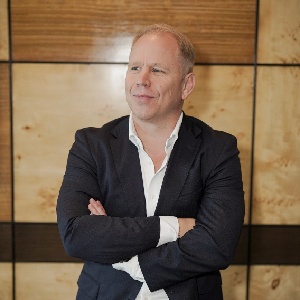
President of Sustainable Aviation
Fuel Association (SAFA), India
“Sustainable aviation fuel is not a single-industry solution — it cuts across many sectors like agriculture, renewable energy, refining, food and aviation,” he emphasized.
Olsson also leads ZR2 Group, which has signed an agreement with the Government of Maharashtra to establish a 345KTA Negative Net Zero SAF plant in the state.
India’s strategic advantage in SAF
Looking over a 5-10-year horizon, he sees India as uniquely positioned to lead in SAF production. “India has a large population, a strong aviation market, excellent geographic positioning, abundant renewable energy potential, and a highly productive agricultural base.”
“When you combine all these components, India can produce the highest-quality SAF with the lowest carbon intensity in the world. In fact, we believe India can outperform any other country if this is executed properly,” he added.
ZR2’s focus is on producing SAF with the lowest carbon intensity while maintaining the highest quality standards allowing for 100% blending. Conventional aviation turbine fuel carries a carbon intensity of approximately 89 gCO₂e/MJ (grams of CO₂ equivalent per megajoule) — the internationally recognised ICAO CORSIA baseline. “Many SAF pathways reduce that to somewhere between 50 and 0. But what we are working toward is fundamentally different,” he said.
ZR2 Group is targeting a negative carbon intensity of around −81 gCO₂e/MJ — meaning that during the fuel’s lifecycle it actually removes more CO₂ from the atmosphere than it emits, he underlined.
Energy Security and Rural Integration
“We are living in a very uncertain geopolitical situation,” said Olsson, citing the impact of global conflicts on fuel prices and supply chains. India is taking a holistic approach – securing energy and food supply while empowering rural communities, he explained. “By linking agriculture with SAF production, you improve energy security, increase food production, support rural income generation, and produce high-quality SAF with very low or even negative carbon intensity. That combination is powerful.”
The Price Challenge
In his view, the single biggest challenge is the price point. “SAF must be financially viable for airlines. If it is not affordable, it will be very difficult to scale adoption,” he stated. “Producing high-quality SAF at a competitive price is absolutely critical and India is well positioned to achieve this with its abundant renewable energy and agricultural supply.”
Scaling Production and Infrastructure
Scalability has multiple dimensions. First is production capacity – can enough SAF be produced at a competitive price? He described a catch-22: airlines want SAF, but only at viable prices. The second challenge is infrastructure. “Scaling SAF requires separate storage, pipelines, blending systems, and logistics. That’s a significant investment,” he pointed out.
Their approach advocates for SAF that is “100% fungible with conventional aviation fuel,” eliminating the need for separate infrastructure and making large-scale adoption considerably easier and cost competitive.
Technology Pathways and Feedstock Constraints
“Currently, the majority of SAF globally is produced using the HEFA (Hydroprocessed Esters and Fatty Acids) process,” said Olsson, referring to fuels derived from used cooking oil and similar feedstocks. While this leverages existing refinery infrastructure, it faces supply constraints. “We are reaching saturation in collecting used cooking oil and similar feedstocks at scale and at competitive prices.”
Other pathways such as alcohol-to-jet, biomass-based fuels, and power-to-liquid technologies that convert captured CO₂ into fuel are still developing, each facing challenges in yield, scalability, or cost.
“The best solution is not about choosing one technology over another. It’s about achieving the lowest carbon intensity at the lowest cost at scale and meet energy and food security,” he underscored.
Reframing the Food vs Fuel Debate
There is a debate around food versus fuel. “We believe it should be food and fuel,” said the SAFA President. Crops like corn can yield both high-quality protein and fuel feedstock. “68% of the Indian population suffers from protein deficiency, not a lack of calories. By integrating protein production into the SAF value chain, you can produce fuel and also tackle malnutrition.”
On global macroeconomic factors, energy security must be a national priority. India, he noted, is taking “a holistic approach – securing energy and food supply while supporting rural income generation.” By linking agriculture with SAF production, you can produce “high-quality SAF with very low, or even negative, carbon intensity and also achieve positive health benefits.”
Policy and Financial Support
Policy support will play a crucial role in shaping the industry. “Governments can mandate blending targets, but forcing adoption without ensuring financial viability can create challenges,” Olsson stated.
He advocates for clear policies on taxation, infrastructure, and incentives. SAF pricing structures may also evolve to include a separate value for emissions reductions – such as Scope 3 credits – though this will depend on market and policy developments.
On viability gap funding, he cautioned: “If the base cost of producing SAF is too high, no amount of incentives will make it viable, so key is to select the right technology and integration to be successful.”
India has already begun setting targets, with blending mandates starting at approximately 1% and scaling up over time. “India has all the right ingredients – renewable energy, agriculture, and aviation demand. We are confident the country will move forward strongly in this space.”
Looking Ahead
In Olsson’s view, the future of SAF lies in achieving three things simultaneously: low cost, energy and food security, and very low or negative carbon intensity. If these conditions are met, SAF adoption will automatically follow.
“Energy security and food security will push this forward. If those are addressed, SAF will grow at a meaningful scale.”
********
Is SAF set to take off in the UAE?
Global aviation’s pledge for net-zero by 2050 is driving the UAE to leverage its hub status to lead sustainable aviation fuel development. R. Keerthana writes.

Come 2027, global airlines must meet a crucial target set by the International Civil Aviation Organization (ICAO). They will be required to offset their net CO₂ emissions from international flights under ICAO’s Carbon Offsetting and Reduction Scheme for International Aviation (CORSIA). One of the ways airlines could do this is transition from fossil fuels to a low-carbon alternative known as Sustainable Aviation Fuel (SAF).
With the potential to cut CO2 emissions by up-to 80% throughout its life cycle compared to conventional jet fuel, SAF is emerging as the most direct and credible solution to achieve these objectives, either alongside or in place of traditional carbon offsets. Airlines that are members of the International Air Transport Association (IATA) have committed to achieving net-zero carbon emissions from their operations by 2050.
Against this backdrop, the United Arab Emirates is positioning itself as a regional leader in SAF development – leveraging its aviation hub status, strong waste-to-value ecosystem, and national net-zero ambitions to build a domestic SAF supply chain.
In 2022, the UAE Ministry of Energy & Infrastructure, together with the General Civil Aviation Authority (GCAA), launched the UAE National SAF Roadmap, setting a target of 700 million litres of domestic SAF production per year by 2030.
It also aims to reach a voluntary target of 1% SAF (locally produced) in fuel supplied to national airlines at UAE airports by 2031. In October 2025, the UAE submitted the third edition of its State Action Plan on Aviation Emissions to ICAO.
The updated plan adopts a comprehensive “basket of measures” to reduce aviation emissions, including 42 projects in operations and technology, and 13 projects related to SAF and low-carbon fuels.
Dubai Municipality, Tadweer Group, and Lootah Biofuels have also launched initiatives in the SAF space, reflecting a growing nationwide effort to develop domestic production capacity and position the UAE as a regional leader in sustainable aviation fuels.
Sustainable aviation fuel (SAF), produced from renewable sources or feedstocks, such as used cooking oils, fats, plant oils, municipal, agricultural and forestry waste, is expected to meet a set of stringent sustainability requirements including regulations set by ICAO’s CORSIA scheme and the EU Renewable Energy Directive (RED). These requirements include food security, water management and human rights considerations. As a “drop-in” fuel compatible with existing aircraft and refueling infrastructure, SAF can cut lifecycle emissions by up to 80% depending on the production pathway.
While future low-carbon technologies will take years to mature, SAF can begin cutting aviation’s carbon footprint today. SAF still has to be blended with traditional aviation fuel, which is made from fossil fuels. Current rules state that SAF can make up a maximum of 50% of the mixture, but there are hopes that airlines will be able to use 100% SAF by 2030.
According to Dr. Udayan Banerjee, Founder, Sustainable Advisory LLC, “SAF has been under development for more than a decade, but regulatory momentum caused by ICAO has accelerated its adoption.” CORSIA aims to stabilize net CO₂ emissions from international aviation at 2020 levels and achieve carbon-neutral growth in the short to medium term. The scheme is currently in its first voluntary phase (2024–2026), before transitioning to mandatory participation from 2027 to 2035 for countries accounting for over 90% of global international aviation activity, he explains. The UAE, Saudi Arabia, and Oman are among the gulf countries participating in CORSIA since 2025.
Waste-derived SAF
Currently, waste oils, including used cooking oil (UCO) and nonedible oils, are the most widely used feedstocks for commercial SAF production. Even industrial waste streams rich in carbon emissions have proven viable for creating lowcarbon aviation fuel.
Beyond oils, municipal solid waste (MSW) is emerging as a promising source. Demonstration projects around the world have shown the feasibility of this approach.
In early 2024, Dubai Municipality signed an MoU with a developer consortium including BESIX and ENOC to develop a facility processing 2,000 tonnes of MSW per day. “The initiative aligns directly with Dubai’s Net Zero 2050 strategy,” says Eng. Mohammed Ahmed Alrayees, Director of the Waste Strategy and Projects Department at Dubai Municipality.
He adds that such projects also reflect the wider climate imperative facing the country and the world: “The urgency of climate change highlights the need for the UAE to develop and implement a unified national policy framework that recognises both the complexities of the aviation energy transition and the country’s unique opportunities and national context. Aviation is one of the UAE’s most successful industrial sectors and a cornerstone of Dubai’s economy.” The SAF generated by Dubai’s WtSAF project is expected to supply Dubai Airport, Emirates Airlines, and other local carriers with fuel that complies fully with ReFuelEU and CORSIA regulations.
Dubai Municipality is actively engaging stakeholders across the ecosystem to build momentum and incorporate feedback from multiple perspectives.
These engagements include the Dubai Supreme Council of Energy, the Dubai Department of Finance, Emirates Airline, Dubai Airports, ENOC, the Dubai Environment and Climate Change Authority, as well as technology providers and project investors, he notes.
Financing and the road ahead
Despite technological progress, financing remains the biggest bottleneck, points out Banerjee. “SAF projects require significantly higher capital expenditure than conventional waste-to-energy plants, and traditional debt financing models often fall short.
Long-term offtake agreements, policy support, and blended finance structures will be critical to unlock investment.”
Inside the Technology
Multiple SAF production pathways have been certified by ICAO. The most commercially mature is the HEFA (Hydroprocessed Esters and Fatty Acids) route, which uses used cooking oil (UCO) and animal fats. However, the UAE’s long-term opportunity lies in scaling SAF from solid waste and biomass.
For municipal solid waste (MSW) and agricultural residues, the process is more complex. Feedstock must first be prepared and segregated, then gasified to produce synthesis gas (syngas). After cleaning, the syngas is converted into liquid fuels using Fischer–Tropsch (FT) or Alcohol-toJet (AtJ) processes.
“These pathways allow flexibility across feedstocks,” Banerjee notes, “but they require careful integration and significant capital investment.”