As the skies get more competitive, the tray table may just become the most powerful brand platform on board.

In the highly competitive world of commercial aviation, the passenger experience is no longer defined by just the seat or the schedule—it’s shaped by every touchpoint, and one of the most emotionally resonant among them is food. In-flight catering, especially in today’s era of personalization and elevated expectations, plays a strategic role in shaping passenger perceptions, enhancing airline loyalty, and differentiating brands.
For dnata, one of the world’s leading inflight catering and retail service providers, delivering meals at 30,000 feet is both a culinary and a logistical feat, rooted in data, innovation, and deep customer insight.
Aligning menus with brand strategy
The food served on board is a direct extension of an airline’s brand identity, emphasizes Robin Padgett, Divisional Senior Vice President of dnata Catering & Retail.
“We use the rich demographic data that airlines have to co-develop menus that reflect their strategic goals and passenger profiles,” he explains. Whether it’s the growing popularity of onboard retail in Northern Europe or the demand for bespoke meals in Asia-Pacific, dnata tailors its offerings to regional nuances and airline positioning.
Through partnerships with specialist companies like En Route, dnata is not just a logistics provider—it’s a culinary collaborator. From sourcing unique products to packaging and delivery, the company is involved at every stage to ensure that what ends up on a passenger’s tray table aligns with both the airline’s identity and the evolving expectations of travelers.
Satisfaction that travels beyond the flight
Premium catering isn’t just a perk—it’s a powerful tool for building loyalty. According to Padgett, “A thoughtfully curated in-flight menu significantly boosts passenger satisfaction and Net Promoter Scores.” Dining remains one of the most memorable elements of a premium cabin experience. Airlines that get it right create emotional connections with passengers, reinforcing brand loyalty long after the flight ends.
And the numbers back this up. Airlines that invest in differentiated, high-quality food options are seeing repeat business and higher satisfaction ratings. In many cases, food becomes the story passengers share, especially on long-haul routes where meal service breaks up the journey and adds comfort to the experience.
Using data to serve smarter
Behind the scenes, data plays a critical role in dnata’s global kitchen operations. Passenger preferences, sales trends, and feedback—especially from crew—inform menu development, operational planning, and waste reduction.
Emirates’ Live Inflight Cabin Crew Communication (LICC) and Knowledge Information System (KIS) are prime examples of how real-time feedback can be used to refine food offerings almost immediately.
“Data helps us optimize down to the cubic centimetre,” Padgett notes. From adjusting packaging size to analysing profitability and even monitoring card decline rates in onboard retail, dnata’s approach is rooted in analytics. The aim is to create insight from complexity—allowing airlines to balance creativity with cost-efficiency, and choice with operational simplicity.
Elevating airline competitiveness
In a landscape where many carriers are racing toward cost-cutting, dnata sees opportunity in enhancing value. “Food and beverage is more than hospitality—it’s a brand differentiator,” says Padgett.
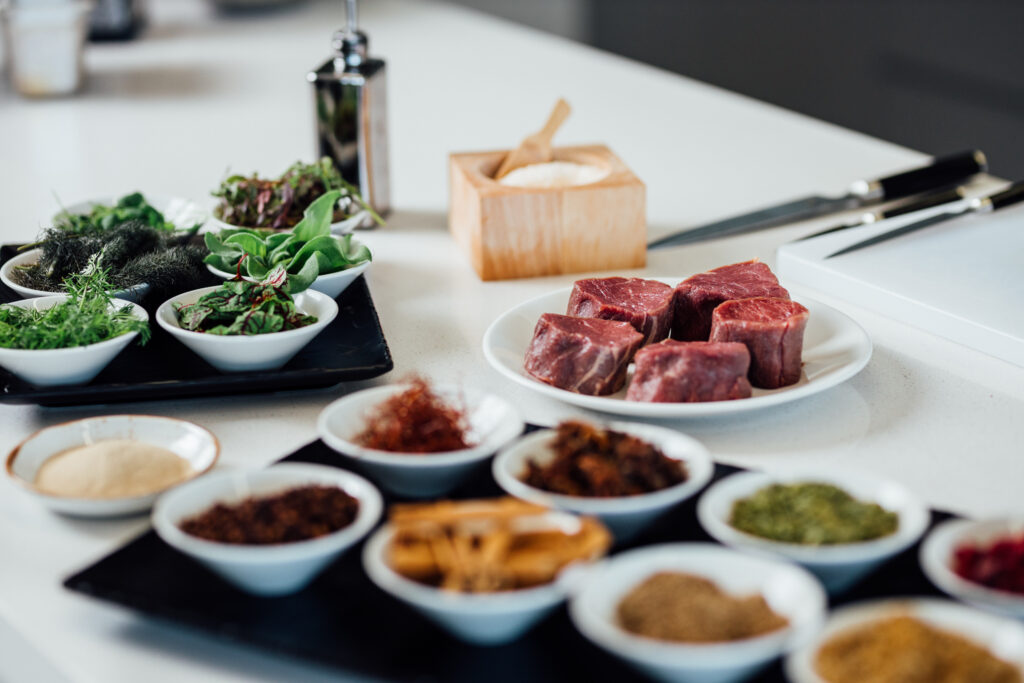
Especially in premium cabins, the in-flight meal is a curated experience that reinforces quality and attention to detail. From locally sourced ingredients to culturally attuned menus, in-flight catering acts as a canvas for the airline’s brand promise.
Importantly, passengers are showing willingness to pay for value. Gone are the days of universally complimentary but mediocre meals. Today, quality retail offerings onboard are breaking sales records for many of dnata’s airline partners. The trend reflects a shift in perception—passengers are open to retail models, provided the product meets or exceeds expectations.
Balancing quality and cost at scale
Managing culinary excellence across global operations isn’t easy, especially when dietary requirements, cultural sensitivities, and volume pressures come into play. dnata meets the challenge through a systems-based approach: combining lean production practices with culinary innovation.

Ingredient sourcing is localised wherever possible to ensure freshness and authenticity, while investments in automation and digital kitchen systems streamline production and maintain consistency.
Cross-functional collaboration is the cornerstone of dnata’s strategy. Culinary experts, procurement teams, operations staff, and quality assurance professionals work together to ensure every meal meets regulatory requirements and brand standards—while staying within budget.
“Food and beverage is more than hospitality—it’s a brand differentiator.”
Robin Padgett, Divisional Senior Vice President of dnata Catering & Retail
Future-proofing through innovation
Looking ahead, dnata is doubling down on technology and R&D to stay ahead of shifting consumer preferences. Tailor-made digital solutions are already being used to detect early trends, allowing rapid response in menu planning and retail adjustments. This proactive approach ensures that both full-service and low-cost carriers can continuously enhance their onboard offerings without lagging behind consumer expectations.
Moreover, with pre-order services and home delivery models gaining traction, the future of in-flight dining is moving toward greater personalization and integration with the wider travel journey.
“We see services becoming more modular and data-driven,” Padgett notes. “It’s about giving airlines the tools to serve their customers in more intelligent, flexible ways.”
Dining at 30,000 feet matters more than ever
In-flight food has evolved from being a functional necessity to a brand-defining experience. For airlines, it’s a strategic lever to drive loyalty, enhance differentiation, and add value—especially in premium cabins and on long-haul routes.
With dnata at the helm of this transformation, inflight catering is becoming smarter, more sustainable, and more aligned with passenger needs than ever before.
As the skies get more competitive, the tray table may just become the most powerful brand platform on board.