Sekisui expects to start trials and scale up e-SAF production in the long term.
August 25, 2025
10:24 AM
Japanese firms collaborate with Velocys on SAF, e-SAF projects
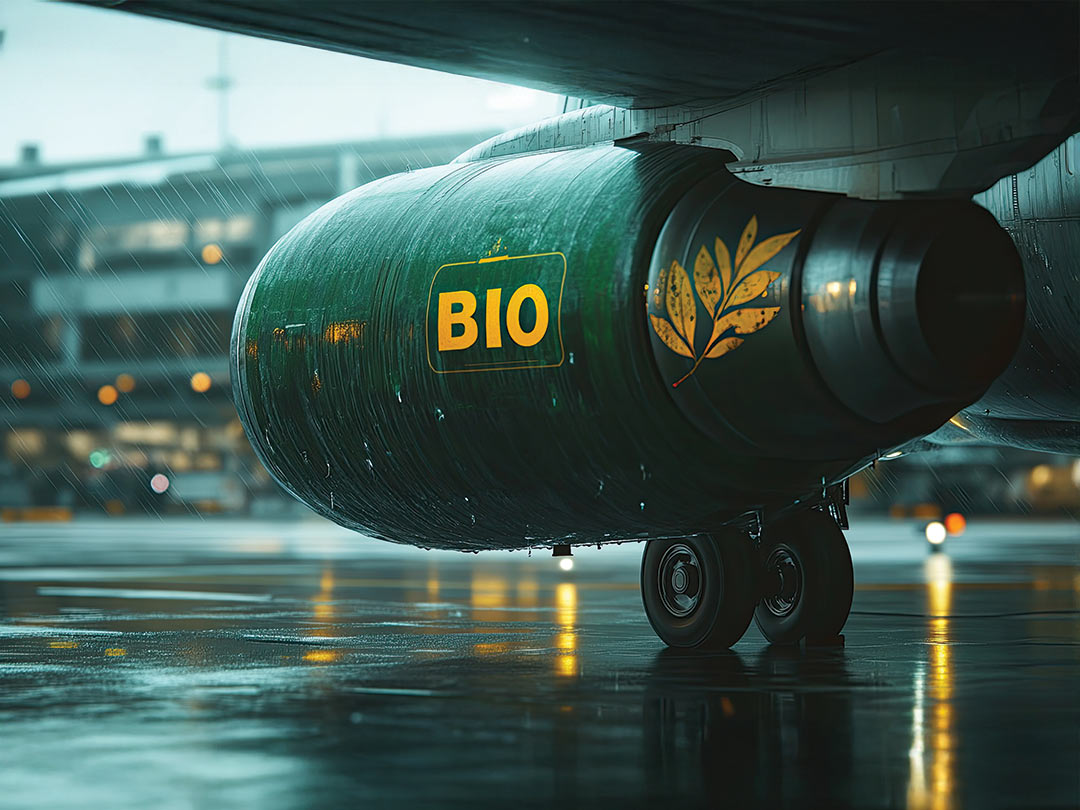
Osaka: Two Japanese companies have teamed up independently with UK- and US-based sustainable aviation fuel (SAF) developer Velocys to apply its Fischer-Tropsch (FT) technology for producing SAF and e-SAF.
Sekisui Chemical announced on 21 August that it has signed an agreement with Velocys to produce e-SAF. Supported by Japan’s state-owned research institute Nedo, Sekisui has created a process that converts CO₂ into CO with a reaction yield above 90%.
This CO will then be combined with hydrogen through Velocys’ FT technology, which achieves a 90–95% conversion rate, to produce e-SAF.
Sekisui plans to first design a process linking its CO₂-to-CO technology with Velocys’ FT system. The company expects to begin trials before scaling up e-SAF production over the long term, a spokesperson told a media company.
Separately, Toyo Engineering—already partnered with Velocys since 2021—will explore different feedstocks for SAF and e-SAF production using FT technology, the firm said on 21 August. Toyo holds a license to deploy Velocys’ FT process in Japan and previously demonstrated woody biomass-derived SAF production in 2021.
However, the company found biomass feedstocks to be expensive, prompting it to test alternatives such as municipal waste, captured CO₂, and green hydrogen. These will be assessed using either Velocys’ FT technology or Toyo’s methanol-synthesis technology, with comparisons based on economic and technical viability.
Beyond SAF, FT-based production can also yield synthetic fuels like gasoline and diesel. Toyo will study whether producing these alongside SAF is commercially feasible. Backed by Nedo, Toyo aims to complete its research between April 2026 and March 2027.

Subscribe to Our Newsletter
Keep in touch with our news & offers
Thank you for subscribing to the newsletter.
Oops. Something went wrong. Please try again later.