Passenger expectations are higher than ever, and effective wayfinding strategies are helping airports improve efficiency and boost customer satisfaction.

Imagine a passenger steps off a plane at a vast, unfamiliar airport. Exhausted from a long-haul flight, and suddenly overwhelmed by the maze of terminals, corridors, and departure gates ahead. Frustration builds because the signs seem unclear, digital screens are crowded with information, and no staff member is immediately available to help. This experience is all too common for travelers worldwide, but it doesn’t have to be.
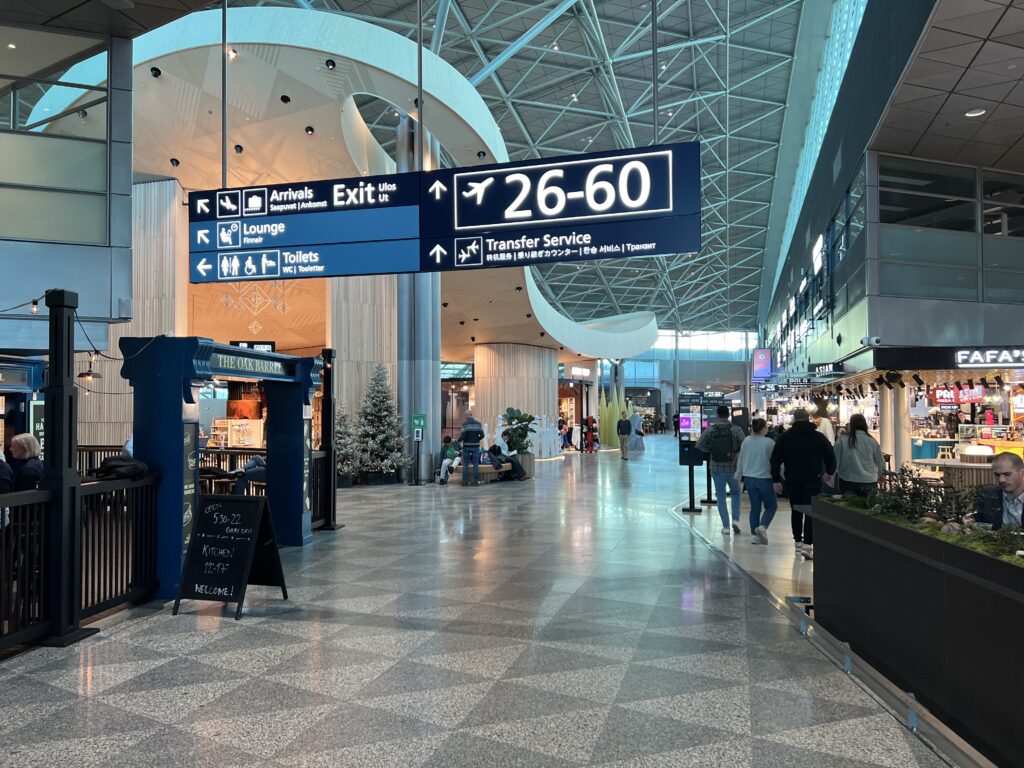
Wayfinding—the strategic design of signs, digital displays, and intuitive layouts—plays a crucial role in ensuring a seamless airport experience. In an era where passenger expectations are higher than ever, effective wayfinding strategies help airports improve efficiency, reduce stress, and enhance overall customer satisfaction.
Complexity of airport navigation
Airports cater to a diverse mix of travelers, including frequent flyers, first-time tourists, families, business executives, and those who do not speak the local language. Each group has unique needs and expectations, making wayfinding a critical element of airport design.
“Operations and management of passenger services in the airports are very complex and demanding. Involving multiple stakeholders, changing policies, dynamics of security, which always evolve. We firmly believe that wayfinding signage needs as much intervention from operations similar to architecture and design teams,” said Yogesh Dandekar, Founder and Design Lead at Sarg Design Studio.

“The diversity of passengers and user personas need wayfinding at airports to be inclusive. From frequent flyers to non-reader passengers who are unaware about the SOPs, everyone must be suitably included. This puts pressure on the wayfinding for its representation, visual design, language, iconography and information hierarchy,” added Dandekar, who has reviewed and redesigned the signing strategy, signing principles and sign design for the multilevel car parking of the upcoming Navi Mumbai International Airport.
A well-planned wayfinding system eliminates confusion, prevents congestion, and ensures passengers can navigate airports efficiently and comfortably.
Passenger at its core
Effective wayfinding helps streamline passenger movement, reducing bottlenecks at check-in counters, security checkpoints, and boarding gates.
Singapore’s Changi Airport has mastered the art of wayfinding. From interactive kiosks to mobile navigation apps, every element is designed to guide passengers effortlessly through its sprawling terminals. The result is an airport that consistently ranks among the best in the world, not only for its efficiency but for its ability to create a calm and pleasant travel environment.

“The core backbone of static signage – traditional wayfinding – will always be required. Maybe in a reduced, more minimal form, but no matter which devices you have, or don’t have, the airport should always convey aeronautic information to all passengers. This signage could very well be fully digital so it would adapt to the time of the day,” said Nicolai Okkels, Partner, Director Transportation at Triagonal – InfoDesign.
Copenhagen-based Okkels has worked on airport wayfinding projects such as King Khalid International Airport, Navi Mumbai International Airport, Heathrow Airport, Copenhagen Airport, Helsinki Airport – Vantaa, and three airports in Greenland.
Airports such as London Heathrow and Dubai International have implemented real-time digital information screens and mobile applications that guide travelers step by step, ensuring they reach their destinations on time.
“The emerging digital technologies will augment the physical wayfinding in areas where directions can be personalized, instructions can be contextualized and engagement introduced to help passengers get appropriate feedback,” Dandekar said. He further paints this picture – In an airport if every sign has a camera, it can recognize the face of the traveler and display their flight details or give them updates.
“We are already working on projects where wayfinding signs are composite visual assets. Dynamic as well as static information, set side by side to deliver messages, will enhance experience. Offering weather updates of the destination, en-route flight details – all of which will always help to reduce passenger anxiety,” Dandekar added.
Accessibility for all
A well-designed wayfinding system must accommodate all passengers, including those with disabilities or special needs. This means incorporating elements such as Braille signage for visually impaired travelers, hearing loop systems for those who are hard of hearing, and clear, wheelchair-accessible pathways.
“As I led the project on standardising wayfinding across all airports managed by the Airports Authority of India, it offered consistency and certainty in terms of sign types, their positioning and integration along the passenger journey,” Dandekar said.
He added, “Though Braille signs were not a part of the project when it was designed in 2017, the Ministry of Civil Aviation in India issued guidelines to build inclusive airports. Tactile flooring and braille text is now commonly included on door signs.”
“We are working on making sound and mobile-based technology to support the wayfinding needs of travellers with disabilities. These, however, need us to work beyond the typical domain of physical wayfinding into technology integration, interactive interfaces and app development.”
Another example is that of Tokyo Haneda Airport, known for its inclusive approach, ensuring that all travelers, regardless of physical ability, can move through the terminals with ease. Elevators, ramps, and tactile paving guide passengers on the spectrum, while staff members are trained to provide assistance where needed.
In a world that is increasingly focused on inclusivity, airports have recognized that accessibility is not an afterthought but an essential part of the travel experience.
Business case for investing in wayfinding
Beyond convenience, an effective wayfinding strategy is a smart financial investment. Airports with intuitive navigation benefit from increased passenger spending, as travelers who can navigate efficiently have more time to explore retail and dining options.
“Wayfinding and revenue generation are related in a symbiotic manner. Wayfinding effectiveness leads to reducing stress on travelers thereby creating an opportunity for retail to pitch their propositions. This also has considerable impact on passenger experience to make the space legible and self-navigable.”
Yogesh Dandekar, Founder and Design Lead at Sarg Design Studio
“A traveller adequately and timely informed with more control on their time and movement opens an opportunity for them to relax and spend. It also enhances the image of the airport making it a sought after property and space to advertise and sell,” Dandekar opined.
Operational efficiency is another major advantage. Clear signage and digital tools reduce the need for staff intervention, freeing up airport personnel to focus on security, customer service, and other critical functions. Airports such as Munich and Doha’s Hamad International have demonstrated how strategic wayfinding investments lead to both operational excellence and commercial success.
Navigating the future of air travel
As air travel continues to expand, airports are rethinking how passengers experience their spaces.
“In my view, a cooperative effort between companies working with the different modes of passenger information would be a way forward. Wayfinding strategists, app developers, and commercial designers – they should be assigned a common passenger information strategy not limited to their own fields, but taking a holistic view on which information passengers need, want and on which technical platforms make most sense,” Okkels said.
The future of air travel is not just about faster planes or bigger terminals—it’s about making every step of the journey seamless. With the right wayfinding strategies in place, airports can ensure that travelers move through their spaces effortlessly, making flying not just a necessity but an enjoyable experience.