Minister Chee, esteemed ministers, Salvatore Sciacchitano, Directors General, distinguished guests, and friends, I am thrilled to be here and extend my gratitude to everyone involved in organizing this exceptional event. Reflecting on last night's panel discussion, understanding the future requires a grasp of the past and present. While I won't delve extensively into the pandemic, …
February 19, 2024
6:45 AM
Willie Walsh Speaks at 2024 Changi Aviation Summit, Singapore
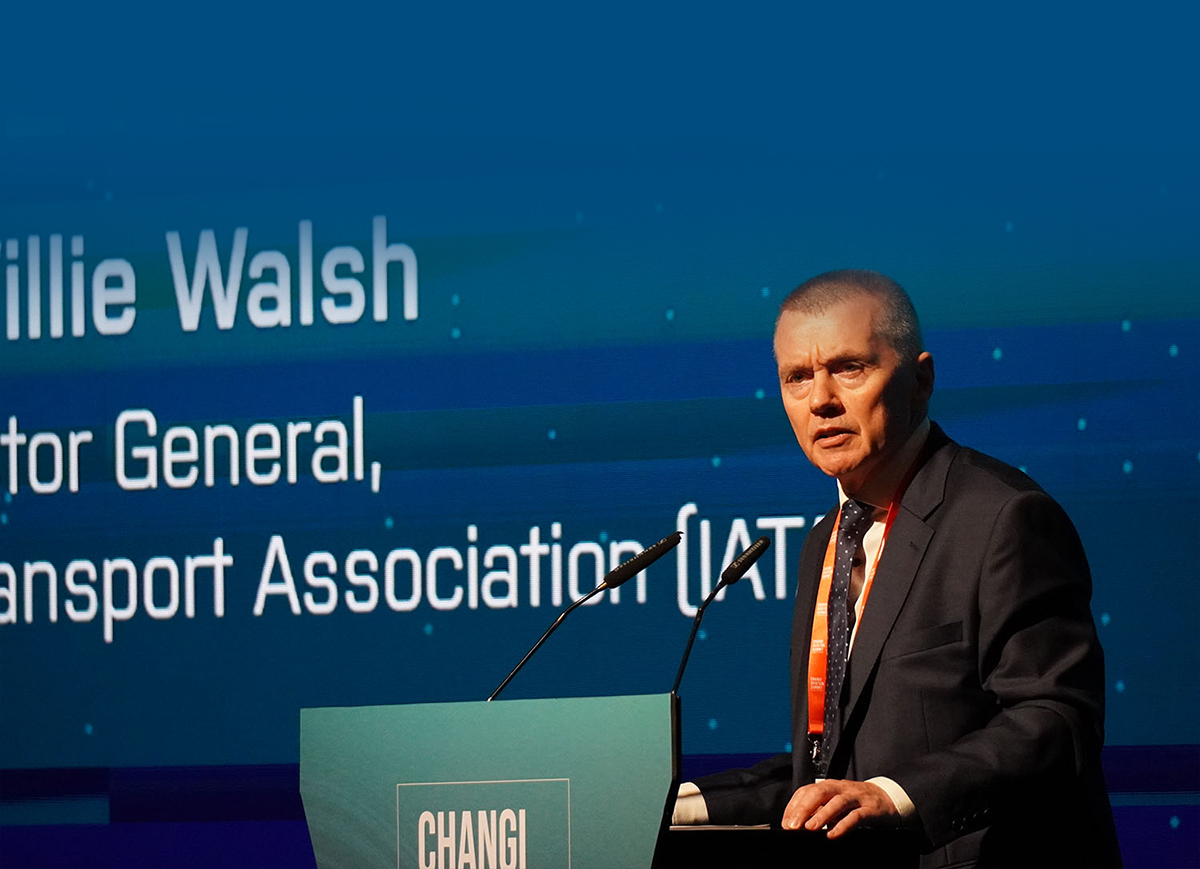
Minister Chee, esteemed ministers, Salvatore Sciacchitano, Directors General, distinguished guests, and friends, I am thrilled to be here and extend my gratitude to everyone involved in organizing this exceptional event. Reflecting on last night’s panel discussion, understanding the future requires a grasp of the past and present. While I won’t delve extensively into the pandemic, I aim to provide insights into the aviation industry’s 2023 developments, its trajectory, and future prospects.
The industry displayed robust recovery in 2023, reaching just over 94% of the 2019 benchmark. Domestically, performance exceeded 2019 levels by almost 4%, while international markets slightly lagged at just over 88%. In this region, overall performance stood at 86% of the 2019 baseline, with domestic markets outperforming by over 2%, and international travel within the region at approximately 73% of 2019 levels, showing a substantial recovery from 57% in January to nearly 83% in December.
Looking ahead, IATA estimates a 3.3% annual industry growth over the next 20 years, significantly lower than the 2010-2019 period, reflecting ongoing challenges such as infrastructure constraints, supply chain issues, delayed aircraft deliveries, engine problems, labor shortages, and the cost impact of transitioning to net zero by 2050. This region is expected to lead with 4.5% annual growth during the same period.
Reflecting on 1990, significant shifts in global aviation contributions were observed across regions. In 2019, Asia-Pacific’s growth stood out, reaching almost 35% of the global market. Notably, domestic markets in China and India, once minimal contributors, now represent over 11% and almost 1.8%, respectively. Africa, however, remains at just over 2%, highlighting untapped growth potential requiring changes for African consumers to benefit.
Major route groups, with the top 20 accounting for 95% of all international travel, saw notable changes between 2019 and 2023. Challenges, including environmental concerns, were addressed, emphasizing the industry’s commitment to achieving net-zero CO2 by 2050. While facing challenges, particularly in the short to medium term, sustainable aviation fuel emerges as a critical focus.
Despite challenges, the industry’s strong demand for sustainable aviation fuel is evident. Every drop produced has been utilized, even during the pandemic. Increased production, incentivized by governments, is essential, and with the right measures and collaboration, the industry is poised to overcome challenges and achieve net-zero goals by 2050.

Subscribe to Our Newsletter
Keep in touch with our news & offers
Thank you for subscribing to the newsletter.
Oops. Something went wrong. Please try again later.