Regional airline FLY91 is charting a bold new course in Indian aviation—by connecting underserved cities with efficient, accessible, and digitally-driven flight experiences, says MD & CEO Manoj Chacko.

In a nation of over 1.4 billion people, where digital infrastructure is advancing rapidly and aspirations are no longer confined to metros, FLY91 has entered the skies with a mission as ambitious as it is timely: to make air travel accessible, seamless, and connected across India’s tier II and III cities.
At the helm of this bold new venture is Manoj Chacko, a seasoned aviation and travel industry veteran, who now serves as the Managing Director and CEO of FLY91. For Chacko, the airline represents not just a business opportunity, but the culmination of over three decades of experience and a vision nurtured over ten years.
FLY91, a regional airline headquartered in Goa, uses a modern fleet of ATR 72-600 aircraft and a digital-first approach. The airline is reshaping regional connectivity and supporting India’s broader vision for inclusive growth in aviation.
“The idea for FLY91 was seeded nearly a decade ago, during a period of considerable flux in the Indian airline industry,” says Chacko. “The goal was always to build a regional airline that prioritizes connectivity for underserved markets. I’m thrilled to finally see that vision take flight.”
A career that informed a vision
Chacko’s own journey mirrors the multifaceted world of travel. He began as an engineer at Larsen & Toubro, but quickly found his calling in aviation through early roles at Spencer & Company and later, Emirates, where he helped establish operations in key Indian cities. This was followed by executive roles at Kuoni SOTC and WNS Global Services, experiences that gave him unique insights into both customer-facing and operational sides of the travel business.
“It became clear to me that regional connectivity was the next frontier,” he explains. “And India, with its rapidly growing aviation market and aspirational population in smaller cities, was ready for a carrier like FLY91.”
Solving for the last mile
FLY91’s goal is clear: connect over 50 tier II and III cities within the next five years. But achieving that goal means grappling with complex operational and infrastructural challenges.
“Aviation is a high-precision business. You succeed through cost leadership, operational discipline, and the ability to manage your most valuable asset—your aircraft,” says Chacko. “Too many failed airlines have treated aviation like hospitality. But the heart of the business is operations.”
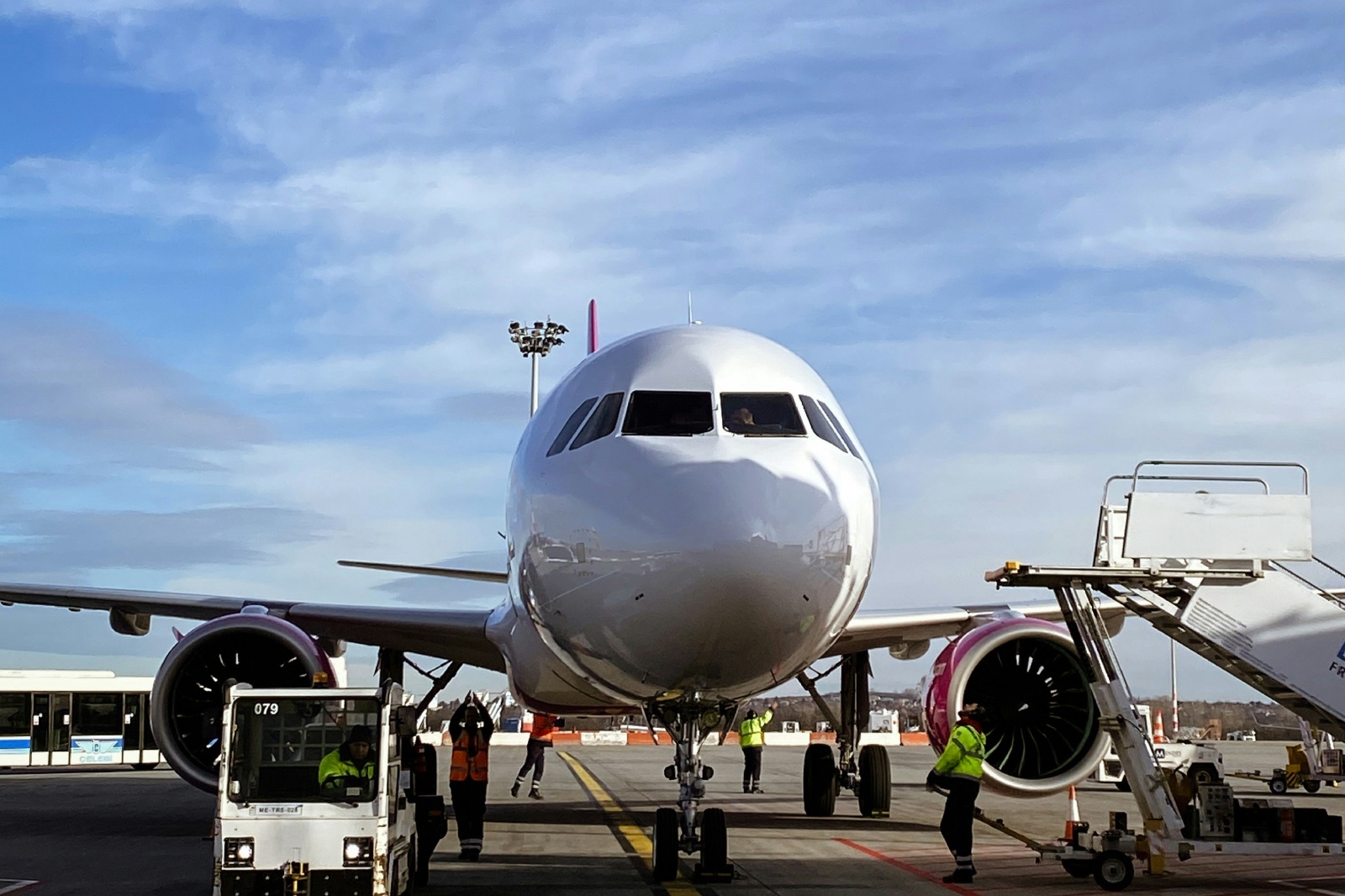
The airline has done its homework. Drawing lessons from both successes and failures, FLY91 has embraced a single aircraft type strategy, prioritizing efficiency and simplicity. Its fleet of ATR 72-600s, widely considered the safest and most fuel-efficient turboprop in its category, is tailored for short regional hops and smaller runways.
“The ATR 72-600 burns just 600 kilos of fuel per flight hour,” Chacko explains. “Yes, the cockpit costs are the same as larger jets like the A320 or 737, but our leasing and maintenance costs are a fraction. On low-load days, we lose far less—making our model more sustainable.”
Coexisting, not competing
What sets FLY91 apart is not just its choice of aircraft or destinations—it’s the clarity of its mission.
“We don’t see ourselves as competing with other airlines. We aim to co-exist with all forms of transport,” Chacko says. “Our focus is on underserved markets—cities where air travel is currently not viable or accessible.”
Many of these cities—like Sindhudurg, Jalgaon, Agatti, and Pune—are now directly connected to larger hubs like Hyderabad and Bengaluru through FLY91. The airline’s routes are typically under 90 minutes in duration, making them ideal for regional turboprop operations.
Yet even with its operational pragmatism, FLY91 hasn’t ignored the passenger experience. The airline offers a regional culinary flair, featuring snacks and beverages inspired by Goa and the Konkan region—such as Aam Panha Surprise and Tangy Bimbli Delight. Each flight also includes Amar Chitra Katha comics onboard, giving passengers a nostalgic touchpoint and sense of cultural continuity.
Building partnerships, digitally
FLY91 has already signed an MoU with the Department of Tourism in Goa to promote tourism via enhanced regional connectivity. Additional partnerships with both private and public entities are in the pipeline.
But its biggest innovation may lie in its digital-first DNA. From booking to check-in, FLY91 has streamlined the process with intuitive technologies—eschewing traditional call centers for AI-driven bots, automated check-ins, and ultra-light digital boarding passes.
“Our boarding pass is just 19 KB in size—compared to 380–400 KB used by most airlines in India. We’ve built the entire company to be paperless and efficient. Everything from our passenger service system to our engineering and MRO was implemented remotely. That’s an industry first.”
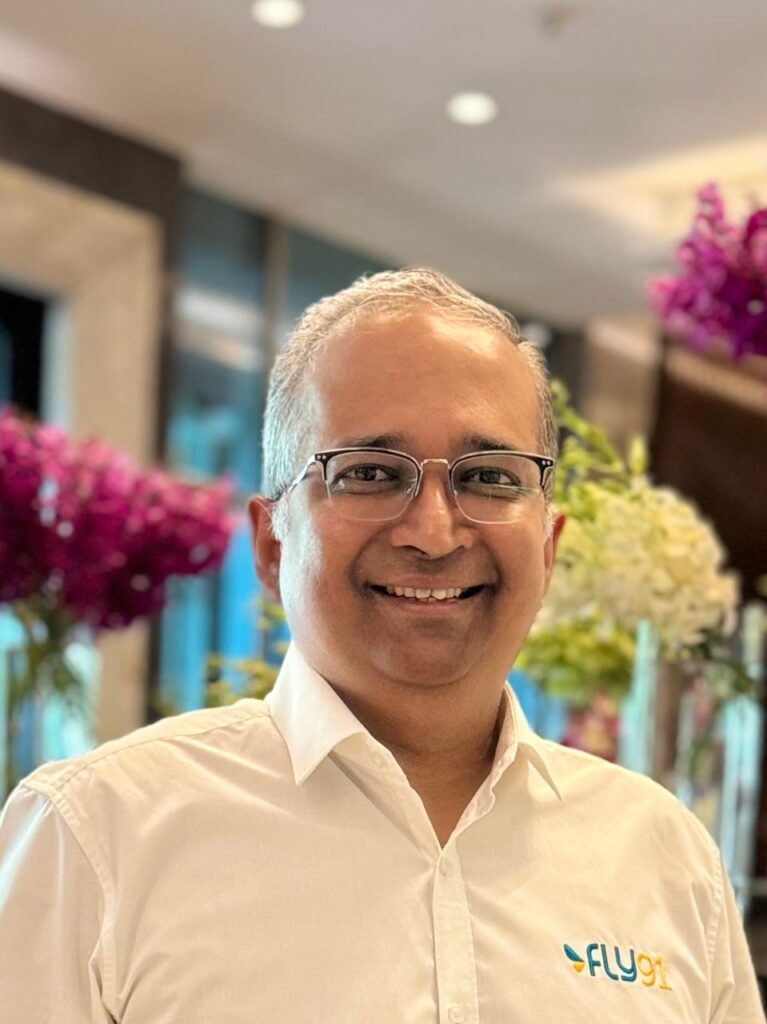
Manoj Chacko – Managing Director & CEO of FLY91
Flying into India’s growth story
As India continues its meteoric rise—fueled by digital innovation, wealth creation, and a burgeoning middle class—FLY91 is positioning itself not just as a carrier, but as a catalyst for economic inclusion.
“India is on track to become the fastest-growing aviation market in the world. We have over 1,500 aircraft on order—but very few of them are regional,” Chacko observes. “FLY91 is filling that crucial gap.”
He points to India’s growing internet user base, ultra-low data costs, and strong digital infrastructure as signs of what’s to come. The aviation boom won’t just connect big cities—it will open the doors to small towns and emerging destinations, fueling trade, tourism, and opportunity.
“We call our mission Bharat Unbound because we truly believe in uniting the real India through air travel,” says Chacko. “This isn’t just about flying. It’s about unlocking potential—in every corner of the country.”