Paul Griffiths, CEO of Dubai Airports, explains how DXB has managed to streamline every step of the passenger journey between the kerb and the aircraft in an exclusive interview with Shweta Nair

1. DXB airport has been lauded for its functionality and vastness. Tell us about the design concept.
Anticipating the growth of Dubai’s aviation sector, we’ve been fortunate to be proactive in building infrastructure and investing in capacity and service enhancements largely through technology. Most airports around the world can’t achieve this rate of growth as the planning and development cycle is prolonged which constrains growth even before new facilities are created.
Our approach has seen us triple both our capacity and our guest numbers over the last fifteen years. This proactive approach has enabled us to pursue the goal of balancing capacity with an exceptional guest experience.
We focus on creating a seamless and comfortable journey for our travellers while ensuring that growth is never stifled, especially for lack of capacity.
Owing to the limited space to build new infrastructure at DXB, our growth depends almost exclusively on investing in the latest innovations and technologies to ensure that we continue to expand our capacity without compromising service quality. We prioritise efficiency through strategic design and smart operations, aiming for smooth, intuitive navigation and relatively shorter connection times.
From biometric authentication and Smart Gates to AI-driven processes and real-time monitoring of operations, we enhance our facilities to streamline every step of the journey between kerb and the aircraft. Our goal is to make every visit to DXB as smooth and enjoyable as possible, keeping our guests’ comfort and convenience at the heart of what we do.
2. When it comes to sustainability, how do you ensure a low carbon footprint in design and operations? What are your green goals for 2025?
Sustainability is at the core of our operations and future planning. We’re actively implementing initiatives that significantly reduce our carbon footprint in both our day-to-day operations and our future design strategy. One of our key objectives is to harness Dubai’s abundant solar energy.
We’ve installed major solar systems at Terminal 2 and plan to expand them across the airport. This initiative will reduce our reliance on conventional energy sources and significantly cut emissions related to building operations.
Our commitment to sustainability extends to waste management as well, we divert 60 percent of food waste from landfills (and increasing) and recycle 100 percent of used cooking oil into biodiesel.
Additionally, we are working on transitioning our ground operations fleet to renewable energy, which is another step towards lowering our carbon footprint. We’ve also changed many hundreds of thousands of lighting fixtures across the airport, including upgrading our airfield and runway lighting to the latest LED technology which has greatly reduced our carbon footprint.
Looking ahead to 2025, our goals are both ambitious and practical. We’re focused on achieving quick wins through daily operational improvements, while also supporting larger industry-wide initiatives.
3. What innovative tech solutions have been implemented for boosting efficiency? Tell us about the on-going digital transformation at DXB airport.
We were early adopters of emigration and immigration Smart Gates, and we continue to lead with advancements by enhancing and converging biometric technologies, with the aim of consolidating passenger verification into a single, instant read of customer biometrics.
This means that there will be no need to stop from the point of arrival at the airport to the aircraft seat, unless our guests wish to use the additional time to explore our innovative retail opportunities or visit our restaurants and bars.
There are very positive benefits from this strategy – we take far less time to complete formalities and we aim to eliminate queues – this results in both happier guests and greater capacity.
And without the stress of the legacy airport experiences which have in the past been mostly negative, our guests will have more free time and will be in a better frame of mind to enjoy our facilities, which will result in greater income from our commercial offerings.
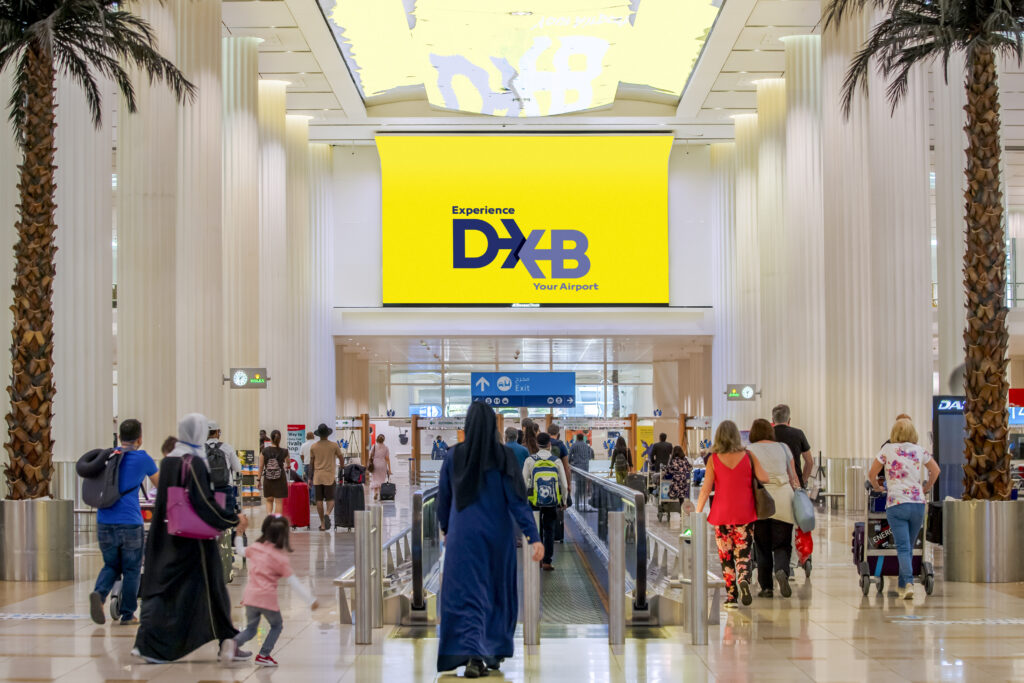
We deploy AI-driven flow modules that predict demand and allocate resources more effectively. This allows us to manage a high volume of guests as smoothly as possible, even during peak periods with intricate detail. We’re integrating advanced security machines that streamline the screening process, enabling guests to keep laptops and liquids in their bags.
This kind of automation has doubled our processing capacity without the need for additional infrastructure — demonstrating a significant shift towards maximising the use of our existing facilities rather than building new ones.
Airport design, transport planning and technological transformation will need to combine into a seamless, integrated development plan for the airport of the future.
Looking ahead, we’re reimagining the future airport. We’re considering how to bring guests closer to their aircraft by fundamentally rethinking the ground-to-air interface. Instead of requiring them to transfer between different systems, we’re exploring designs that allow direct access from landside transportation to various terminals.
The concept is that customer dwell time should be in sight of their aircraft which is both convenient and reassuring. Our commitment to innovation isn’t just about implementing new technology; it’s about fundamentally rethinking airport design to better serve travellers. By focusing on maximising efficiency and improving the experience, we’re setting new standards for what airports can be and how they can function.
4. Is it true that DXB Airport is as big as 297 football fields?
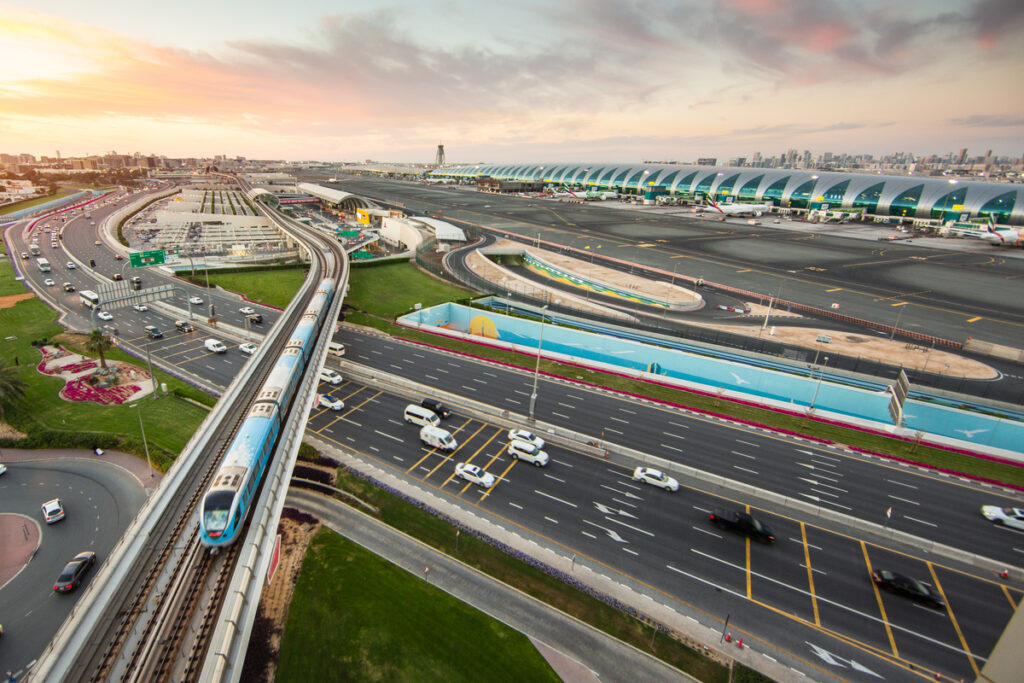
Yes, DXB Airport spans an area equivalent to 297 football fields, making it one of the largest in the world. We also operate a 24/7 operation which means that we also have one of the largest customer throughput rates per hectare as we accommodate an unusually high percentage of large aircraft, making our throughput per runway slot the highest in the world.
5. Complete this sentence. The future of airports lies in …
The future of airports lies in creating the most efficient and effective transition between ground and air transportation. This will need a completely different approach to airport design in which walking distances are reduced, processing time is virtually eliminated and airports become a collection of intimate areas where customers can relax in comfort just a few minutes away from their plane. It requires a total rethink of the end-to-end journey where all the formalities in dealing with travel consent and guest luggage are handled at the very beginning of the journey, allowing the traveller to relax in a pleasant and stress-free environment.
The transition between surface transport also must be completely re-evaluated to allow a transport system to both pick up and drop guests as close as possible to the aircraft. Most of the legacy systems and processes that guests experience today will need to either be completely transformed by technological innovation or eliminated altogether.
6. Once the airport operations are moved completely to the mega-hub at Al Maktoum, what is your plan for DXB airport?
It is important that we achieve a seamless transition between DXB and Al Maktoum International (DWC). This will take some time to complete due to the sheer scale of the operation. It’s very early to speculate on the future of DXB but the firm intention is for Dubai to operate a single mega-hub which will serve both guests in transit to other destinations as well as cater for the future growth of the city which is expected to continue apace.
7. What are the key reforms that you would prefer to see in the aviation industry? Tell us one thing that you would like to introduce in your airport that no other airports have?
One of the issues with most airports around the world is the presence of too many stakeholders. Airports are extremely complex and rely on thousands of time-sensitive processes all coming together at the right moment and these are more difficult to manage when they are under the direction of so many difficult entities.
In Dubai, we’ve worked exceptionally hard in bringing all of these entities together and integrating them into a single control centre in which hundreds of different entities work together under one roof, with the single aim of keeping everything running smoothly.
We’ve recognised that, for this to happen effectively, we need the latest technology and systems integration, but we also need to win over the hearts and minds of our people to ensure that we all work together in perfect harmony to create one single outcome – happy guests. We’ve always believed in creating a shared vision that everyone understands and is an enthusiastic contributor.
We are primarily in the hospitality business, and we see that great service is delivered by people who are proud and happy to be fulfilling their role as they are supported by supportive internal culture, great systems and processes. At the end of the day, it is our guests who decide if we are successful and we constantly measure our performance through their eyes.
Airports are the start or end point to any journey by air and there should be more global standards to ensure that guest convenience is optimised throughout the journey.
Most of the global systems on which the aeronautical sector depends were conceived many decades ago and are holding back progress in this area. Governments also need to get closer together in defining standards for immigration and emigration that do not differ so significantly from country to country.
This would make customer journeys far more seamless and make international borders more secure. Lastly, I’d like to see people in our global industry relieved from the humdrum of poor systems and processes to enable them to focus on presenting a warm and friendly face to air travellers worldwide.
8. As an airport CEO, how does your day look?
My job as an airport CEO is highly varied and challenging as no two days are ever the same. During my entire aviation career, which has spanned several continents and decades, there has always been a fascinating blend of strategic planning, operational oversight, public relations and engagement with people, both internally and externally.
One of the fundamental shifts between working in the industry and my two decades as an airport CEO is the fact that the pace and tone of the organisation is set by your demeanour, attitude, and behaviour. Management responsibilities are more lateral than vertical. It is important to acknowledge that a complex operation such as DXB relies on fantastic teamwork and that can only be created by having the capability and trust within the team.
We constantly enhance the capability of the organisation by hiring, training, developing and retaining people from a young age, and encourage them to develop their career within the organisation.
Capturing youthful enthusiasm is a vital part of our cultural journey and I spend a lot of time with our young graduates and more junior staff – I think there is a lot to learn about the future of the world by staying close to the hearts and minds of our future managers.
I also have a great senior team, the vast majority of whom have come from within our business and have demonstrated the talent and capability over many years and have been actively promoted to positions of senior leadership. It is important to strike a careful balance between leadership and empowerment to make everyone feel they have a say in the strategic direction and operational performance of our business.
I am particularly proud that our leadership now comprises more than 70% of UAE Nationals who have worked hard to demonstrate their commitment and capability to perform at the highest level in the most senior roles. They are a great team and I feel both privileged and proud to lead them. Of all the legacies that any leader could have, making sure that there is a talented and capable team of highly motivated local employees to take the business forward to greater heights is the one I would choose.
When I joined Dubai Airports in 2007, having spent four years as CEO of London Gatwick Airport, both airports had similar customer numbers, around 32m. At DXB, we had 3,800 employees.
Today we will achieve an annual customer number of 92m with a significantly lower rate of growth of our infrastructure. And we have 1,800 employees and are in the top 10% of global companies for both guest and employee satisfaction.
It’s been a fantastic journey, but we all should remember that we are in Dubai, so in reality, it’s only just begun.