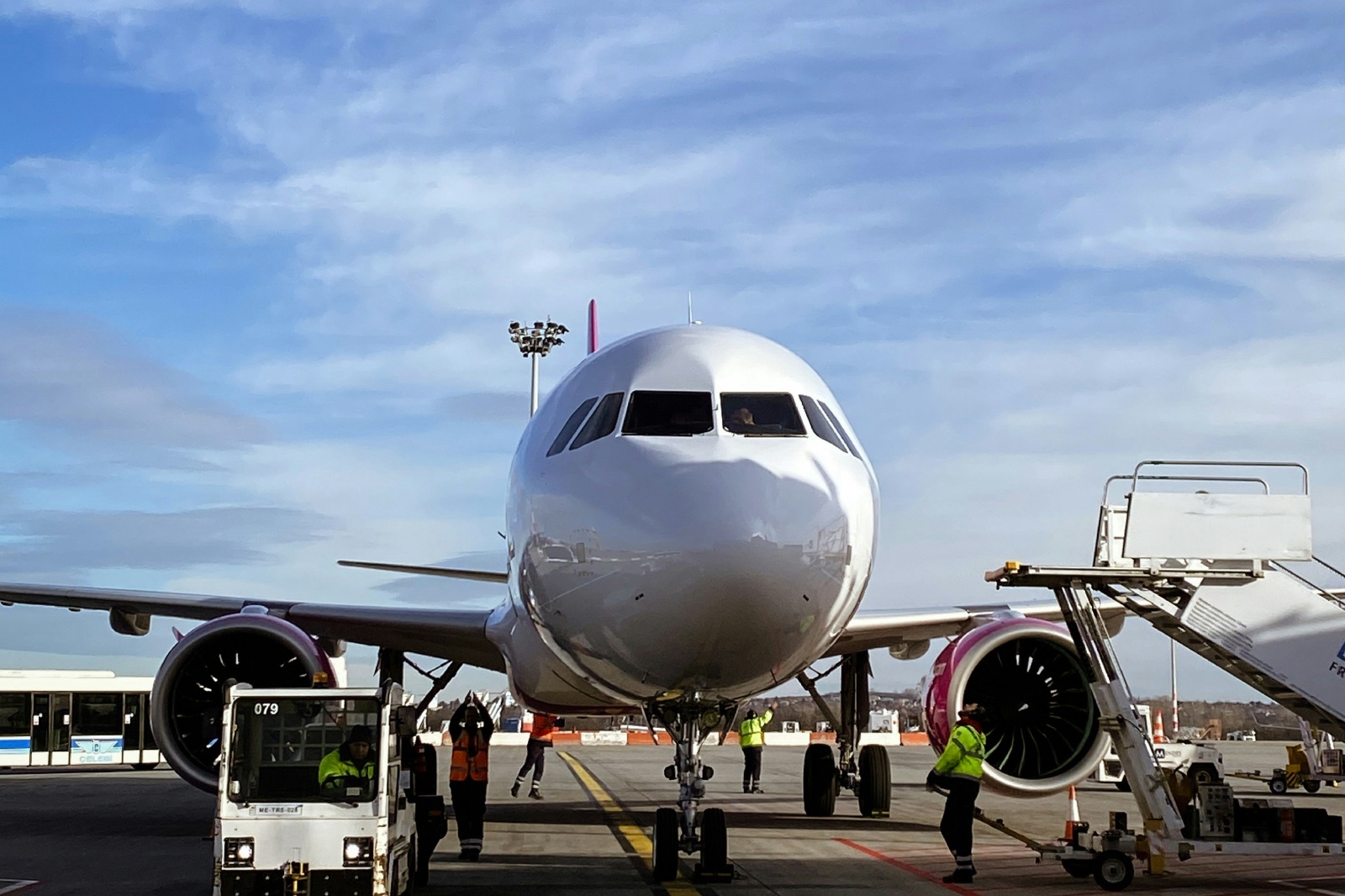
Innovation isn’t just a buzzword at this airport—it’s the engine powering the best practices.

In today’s rapidly evolving aviation landscape, modern airports must adopt innovative best practices to boost operational efficiency, enhance passenger experiences, and stay ahead of technological advancements. Tatsuya Izumi, Deputy General Manager at Narita International Airport Corporation, shares his insights on creating state-of-the-art systems and processes that set new benchmarks for airports worldwide.
Embracing advanced technologies
Modern airports are increasingly leveraging technology to streamline operations and enhance security.
Izumi highlights the transformative potential of computer vision in airport operations, “One of the most promising technologies is computer vision, which has vast applications in airport operations, from facial recognition and baggage biometrics to passenger flow management.” The integration of computer vision not only enhances security measures but also helps in optimizing passenger throughput at busy terminals.
Moreover, Izumi is closely monitoring the development of physical AI, also known as embodied AI.
“Embodied AI tech has the potential to revolutionize not only the aviation industry but also the broader society by introducing entirely new solutions for automation and decision-making.”
Tatsuya Izumi, Deputy General Manager at Narita International Airport Corporation
With such technologies, airports can anticipate a future where intelligent systems manage tasks that were once labor-intensive, leading to smoother operations and improved overall efficiency.
Leveraging data for operational excellence
A transformative trend in modern airport operations is data democratization. In the past, collecting and analyzing operational data was cumbersome and often required manual intervention. Today, open data architectures and the advent of generative AI have made it possible to retrieve and process large volumes of data quickly and accurately.
Narita International Airport has been a leader in this arena. More than a decade ago, the airport began integrating open data architectures into its building management systems to improve facility operations and energy consumption.
This approach has since evolved, with data now being used to enhance every facet of the airport—from passenger experience to overall operational efficiency and facility management. By harnessing real-time data, airports can make informed decisions, quickly adapt to changing circumstances, and predict future trends. This data-driven mindset is a best practice that modern airports must adopt to remain competitive.
Enhancing ramp operations and sustainability
As the Asia Pacific region braces for an influx of 762 million international visitors, airports face the dual challenge of increasing capacity and maintaining operational efficiency.

Izumi stresses, “The electrification of GSE and other fleets used in ground handling is crucial from the perspective of sustainability, and airports must develop the infrastructure to accommodate them,” he states.
He also points out that “improving airport capacity and efficiency is equally critical for airports in the Asia Pacific region.” There are two ways forward: one is to invest in expanding physical infrastructure, and the other is to boost productivity by transforming passenger processes—such as check-in, baggage drop, and boarding—and by streamlining ground handling procedures like towing, cargo loading, cabin cleaning, and fueling.
Izumi emphasizes the importance of collaboration in achieving these objectives, “To drive progress, airports must embrace innovative, never-seen-before solutions and foster collaboration among airlines, ground handlers, and regulatory bodies.”
Optimizing baggage handling systems
A critical component of any airport’s functionality is its baggage handling system (BHS). The fundamental goal is simple: deliver checked luggage to the correct destination on time and without damage.
However, as Izumi explains, “It’s very important to keep the principle in mind in the design work without being confused and disturbed by the limitations and restrictions.”
In many terminal designs, the BHS is an afterthought, often facing obstacles due to being considered last in the planning process. Despite these challenges, Narita is determined to innovate. For the new passenger terminal scheduled to open in ten years, Narita’s team took an unconventional approach.
“We explored best practices in logistics, engaging with companies that had already integrated advanced technologies and automation into their operations,” Izumi revealed.
By drawing inspiration from industries where innovation is already a reality, Narita integrated solutions such as a full individual carrier system (ICS), a storage-centered just-in-time delivery model, and autonomous mobile robots (AMRs) into the new BHS design. This “significant shift” from traditional methods, he added, “could set the standard for BHS design over the next decade as technology continues to evolve.”
Fostering continuous innovation
Continuous innovation is the cornerstone of operational resilience in the airport industry. “Innovation will drive productivity despite numerous obstacles to success,” says Izumi.
By streamlining day-to-day operations, innovative technologies and processes not only improve efficiency but also enhance the ability to recover from disruptions. This continuous drive for innovation equips airports with the agility to handle unexpected challenges, ensuring a smoother operational flow even in adverse situations.
Narita International Airport exemplifies best practices by rethinking traditional systems—whether by overhauling baggage handling systems, integrating cutting-edge technologies like computer vision and embodied AI, leveraging open data architectures, or prioritizing sustainability and collaborative innovation.
For Izumi, fostering a culture of innovation means investing in research and development, encouraging creative problem-solving, and staying attuned to global technological trends.
“The productivity brought by innovation will be hugely helpful in dealing with disruptive situations and recovering from them by streamlining the day-to-day operation,” he explains. Ultimately, this approach enhances an airport’s readiness for unexpected circumstances and sets a foundation for long-term operational excellence.
A multifaceted approach
Modern airports are complex ecosystems that must continually evolve to meet rising demands and embrace new technological frontiers. Narita International Airport exemplifies best practices by rethinking traditional systems—whether by overhauling baggage handling systems, integrating cutting-edge technologies like computer vision and embodied AI, leveraging open data architectures, or prioritizing sustainability and collaborative innovation.
As Tatsuya Izumi aptly puts it, “Innovation is essential to drive productivity and prepare for unexpected challenges.”
By adopting these insights and best practices, airports worldwide can not only enhance their operational resilience but also deliver superior passenger experiences, paving the way for a future where efficiency, sustainability, and innovation go hand in hand.